
Last updated September 20, 2026
Free on-site gate assessment - hinges, posts, and your LiftMaster or Nice gate operator checked before anything is quoted
The assessment is free and the quote is the invoice.

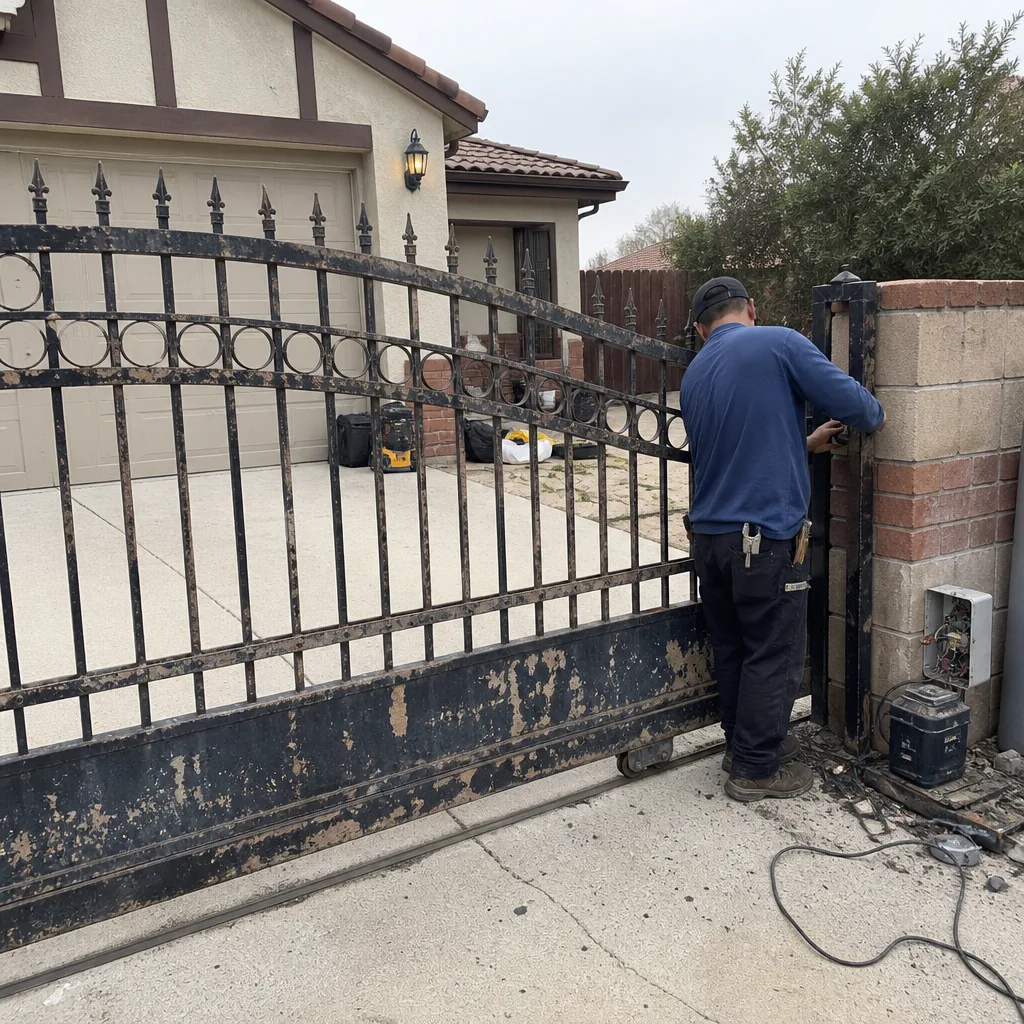 Before
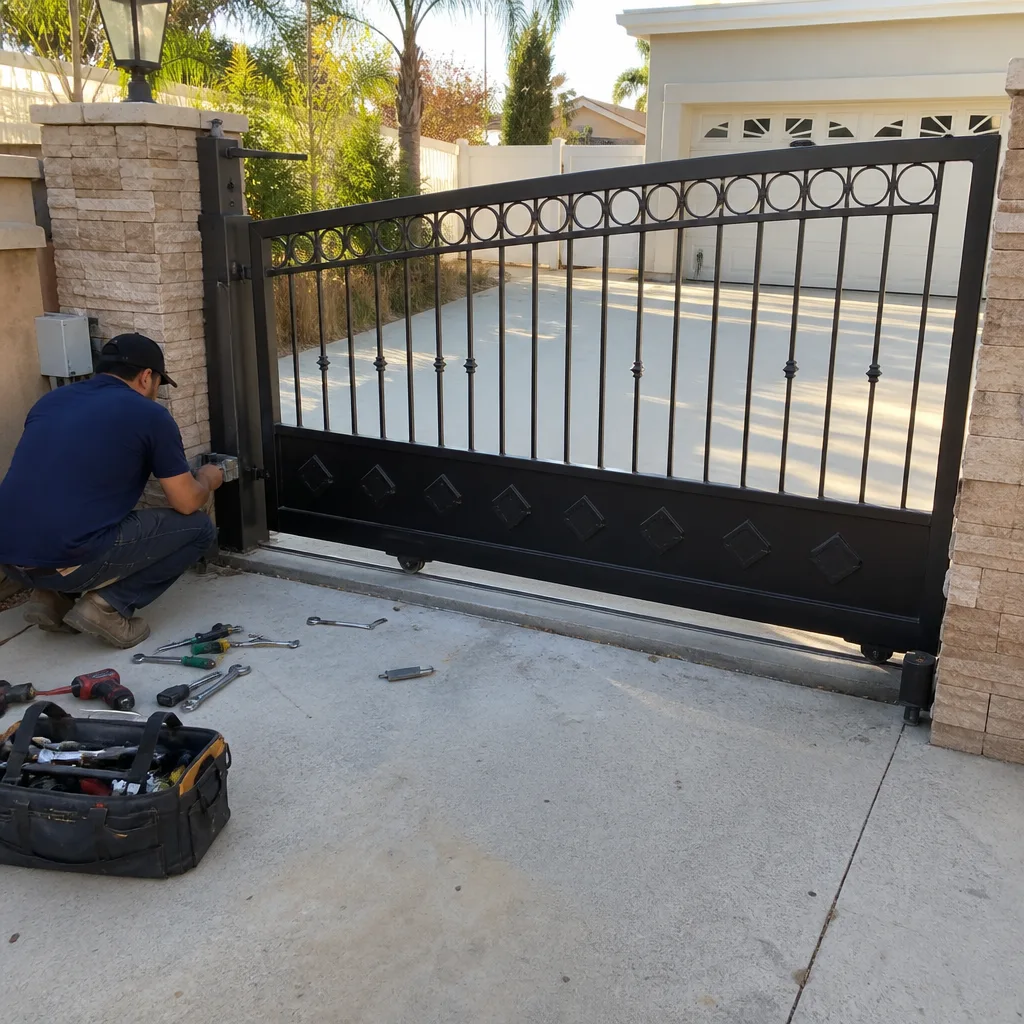 After
After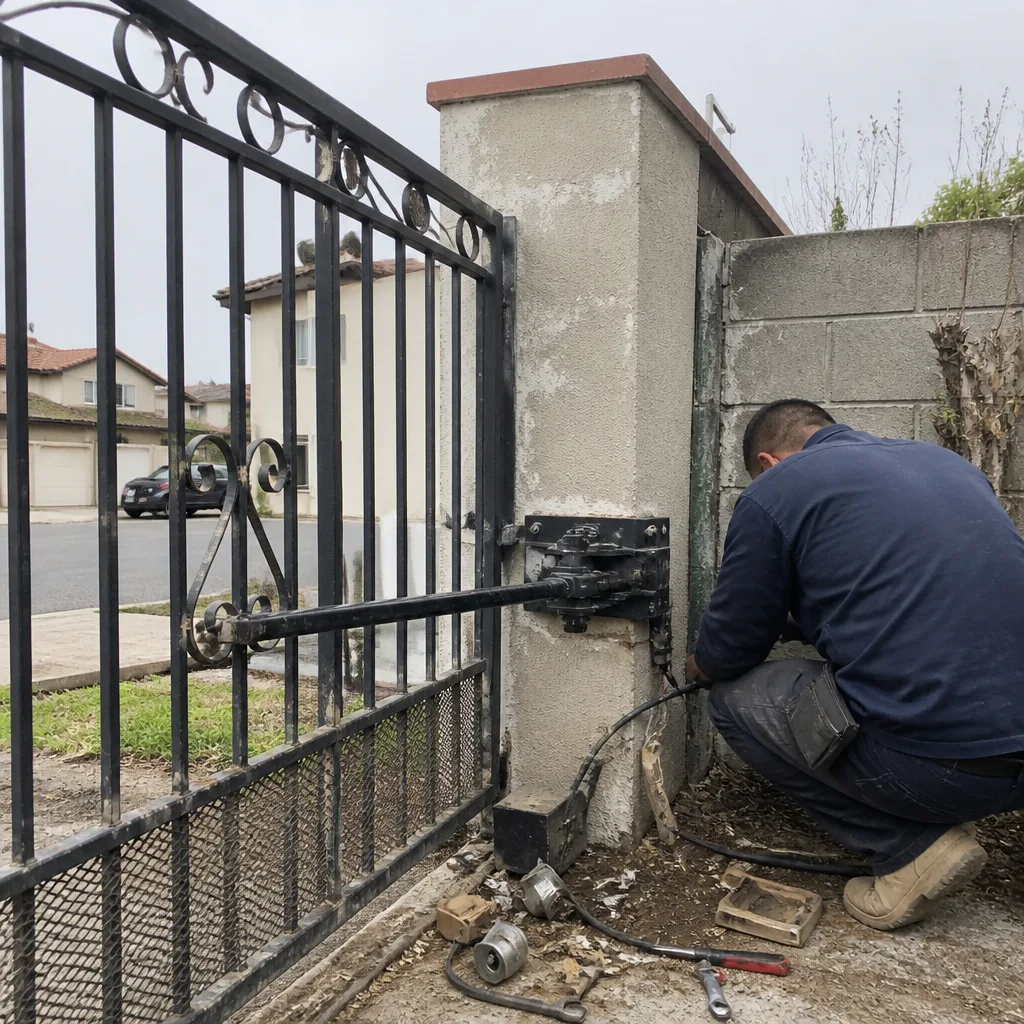 Before
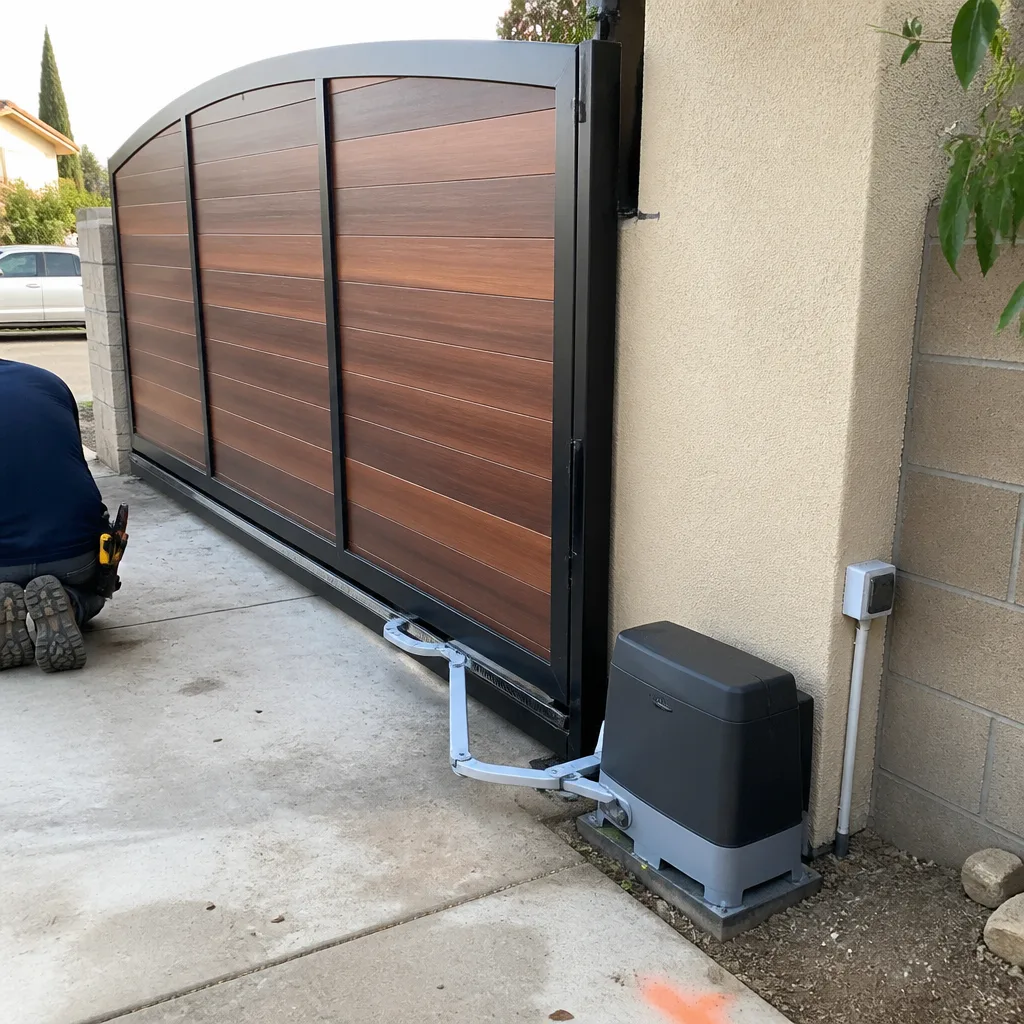 After
After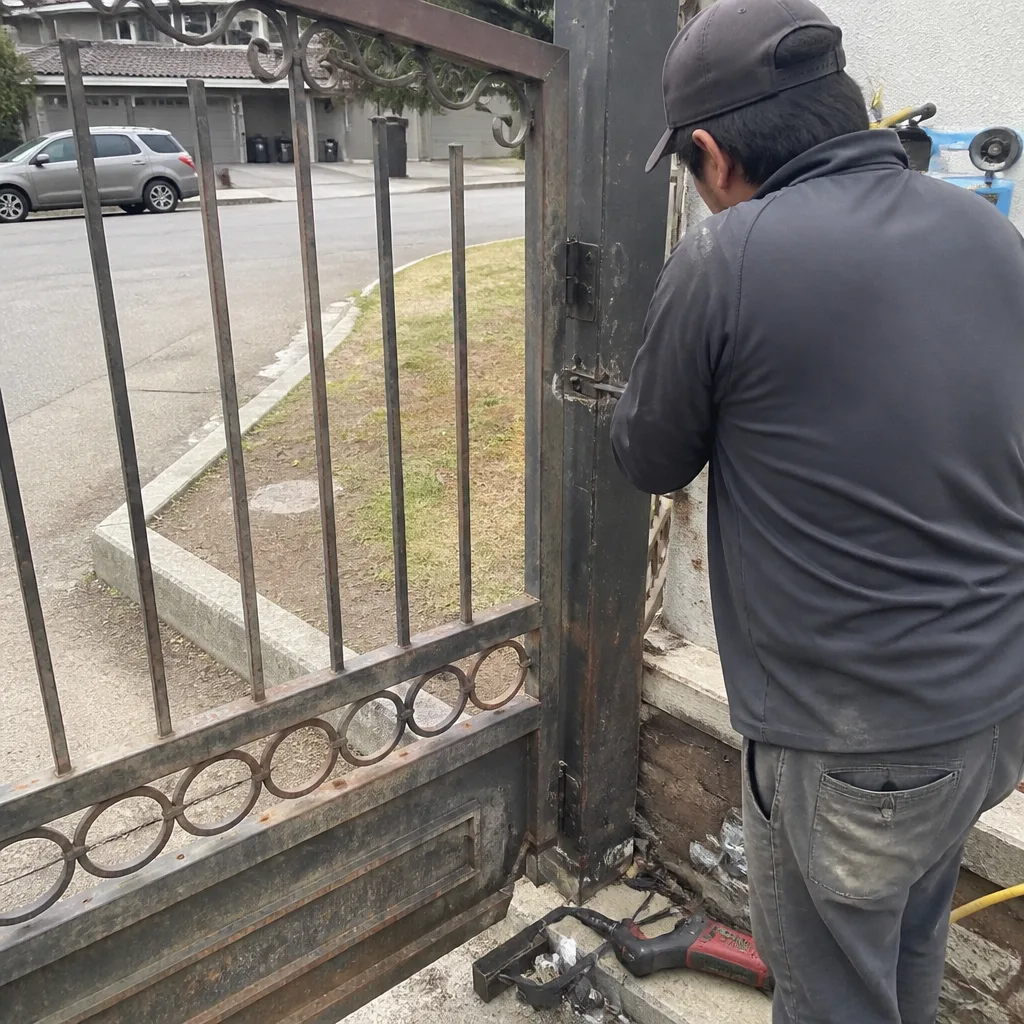 Before
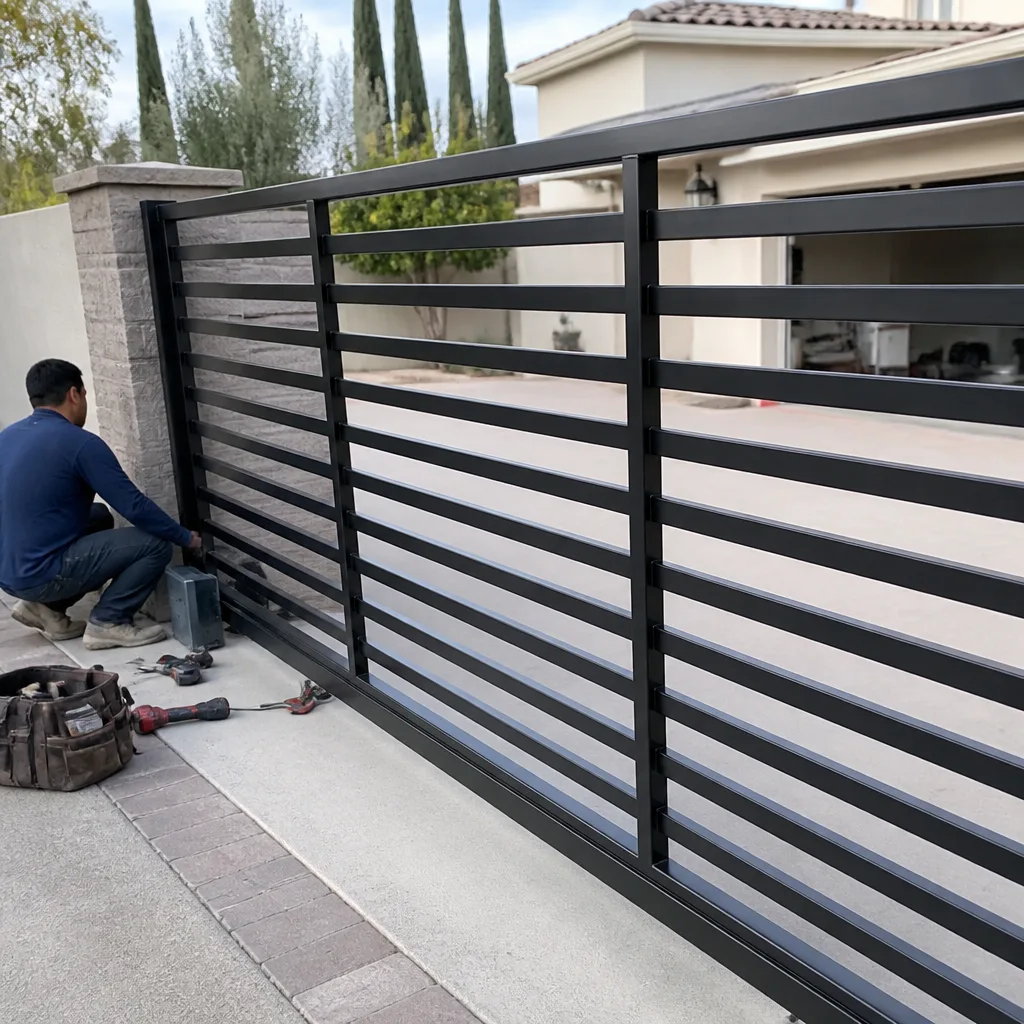 After
AfterHow to Hire a Gate Repair Contractor in Rancho Cucamonga: A Step-by-Step Guide
California’s Contractors State License Board classifies automatic gate work under the C-61/D-28 limited specialty license. Most homeowners in Rancho Cucamonga never ask to see that number. The result is a quiet epidemic of unlicensed handymen installing and servicing gate operators whose work immediately voids the manufacturer warranty on a LiftMaster or Viking motor that cost $1,400 to $4,200. This guide walks you through the exact verification steps, the documents that separate a paper-trail contractor from a handshake operator, and the red flags that show up in the first phone call. For more detail, see The Complete Guide to Gate Repair in Rancho Cucamonga. By the end, you’ll know how to hire a gate repair contractor in Rancho Cucamonga without learning the expensive lessons the hard way.
Quick Answer
To hire a gate repair contractor in Rancho Cucamonga, verify their C-61/D-28 license on the CSLB website in under two minutes, request four documents before signing (written scope of work, itemized parts list with model numbers, written price, and proof of general liability insurance), and confirm they leave a documented record after the repair. Never pay in full upfront, and treat any contractor who resists a written price before work starts as a red flag you cannot afford to ignore.
Table of Contents
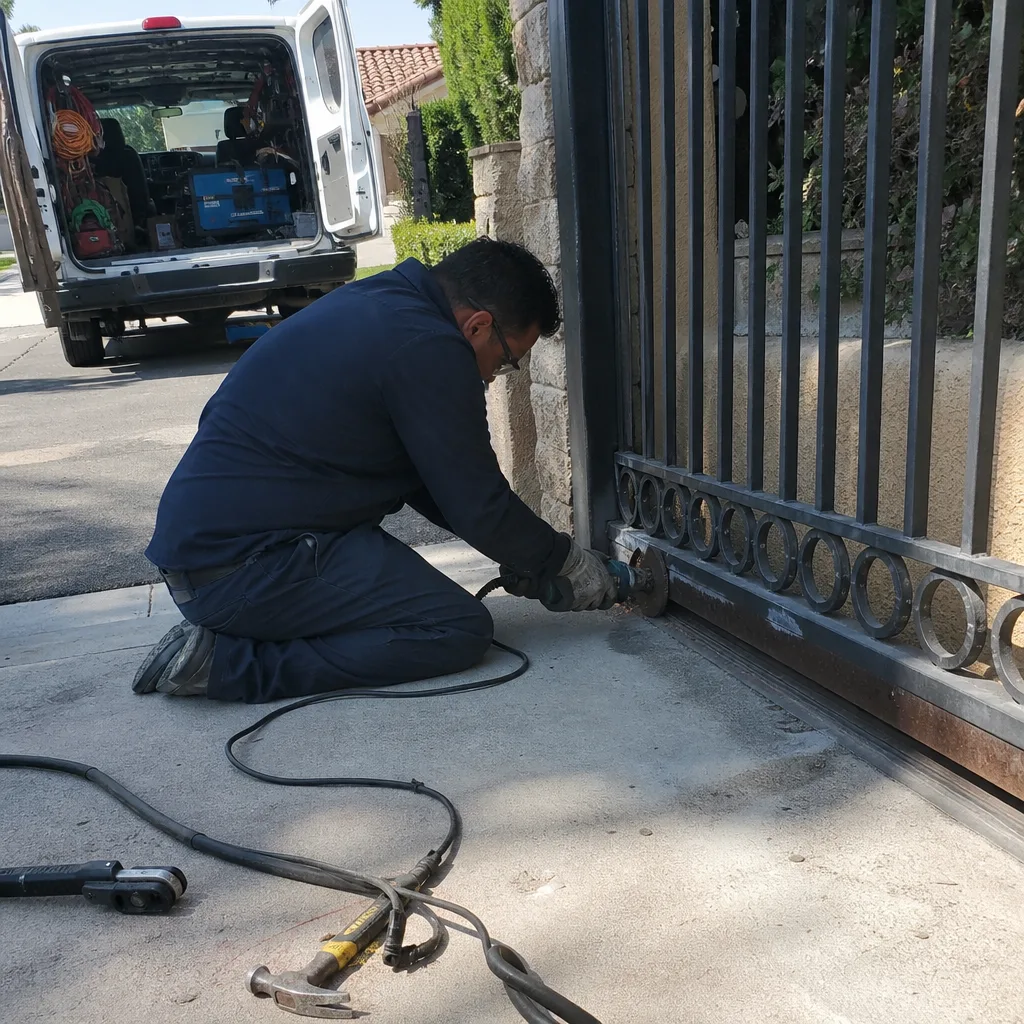
- Step 1: Verify the C-61/D-28 License Before Anything Else
- Step 2: Request the Four Documents That Matter
- Step 3: Spot a Bait-and-Switch Estimate Before It Costs You
- Step 4: Ask What Gets Left Behind After the Repair
- Step 5: Structure a Payment Schedule That Protects You
- What Rancho Cucamonga Gate Repair Actually Costs
- Questions to Ask During the Phone Call
BeforeAfterStep 1: Verify the C-61/D-28 License Before Anything Else
Here’s what most Rancho Cucamonga homeowners don’t realize until it’s too late: a general contractor’s B license does not authorize automatic gate work. Neither does a handyman business permit from San Bernardino County. The only license that legally covers gate operator installation and repair in California is C-61/D-28, a limited specialty classification for “gate systems and operators.” Ask for the license number. Then verify it yourself.
Go to the CSLB website, click License Check, and enter the number. The result page shows you three things that matter: whether the license is active, whether it carries the D-28 classification, and whether there are any pending complaints or disciplinary actions. An expired license shows “EXPIRED” in red at the top. A suspended license shows the suspension date and reason. Both of those should end the conversation immediately.
We’ve been called out to Rancho Cucamonga properties where a “gate company” had installed a brand-new Ghost Controls kit that failed within six months. The homeowner discovered the installer’s license number belonged to a painting contractor. Ghost Controlsvoided the warranty on the spot. That’s a $900 mistake that a two-minute CSLB search would have prevented.
The license also establishes a paper trail. Licensed contractors in California carry a mandatory $25,000 contractor’s bond and must show general liability insurance if asked. An unlicensed handyman carries neither. If the gate falls on a car, a child, or a delivery driver, you’re personally liable. That’s not a risk worth taking for a $150 discount.
Step 2: Request the Four Documents That Matter
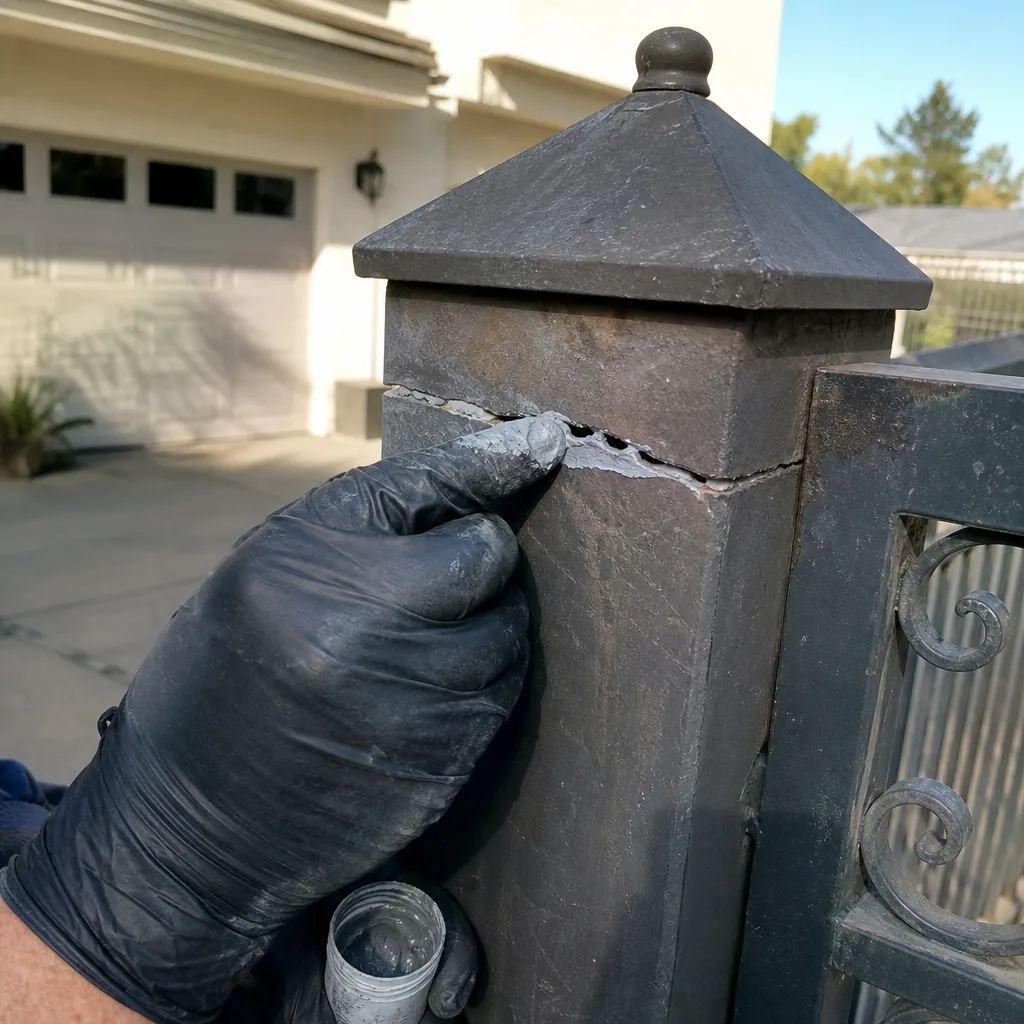
The difference between a contractor who stands behind their work and one who disappears after the invoice clears comes down to paperwork. Specifically, four documents. Every one of them should be in your hands before you sign anything or hand over a deposit.
Document 1: A written scope of work. This is not a verbal description of “fixing the gate.” It’s a line-by-line list of what gets repaired or replaced. “Replace swing gate motor with LiftMaster CSL24UL, re-terminate all low-voltage connections, set limit switches, test photo-eye alignment.” That’s a scope. “Get the gate working again” is a hope, not a contract.
Document 2: An itemized parts list with model numbers. If the contractor writes “new motor” without a model number, you don’t know whether you’re paying for a $220 residential Mighty Mule or a $1,900 Viking heavy-duty operator. Model numbers let you verify pricing, confirm warranty eligibility, and hold the contractor accountable if the wrong part shows up.
Document 3: A written price. Not an estimate range. Not a verbal ballpark. A flat number in writing. Under the Haven Standard we follow, the written price is handed over before any work starts. If a contractor won’t put the number in writing, that’s an answer, not an oversight. For context on what repair pricing looks like, see our Gate Repair in Rancho Cucamonga page.
Document 4: Proof of general liability insurance. Ask for the certificate of insurance and call the carrier to confirm the policy is active. It takes ten minutes. A legitimate contractor has no problem providing it. A contractor who hedges, stalls, or says “don’t worry, I’m covered” is telling you something useful.
Step 3: Spot a Bait-and-Switch Estimate Before It Costs You
The bait-and-switch estimate follows a predictable script. It starts with a low verbal number, usually delivered in the driveway after a quick look at the gate. “Probably around $350, maybe a little more depending on what I find.” That’s bait. Then the work starts, the gate gets opened up, and suddenly the motor is worse than expected, the hinge brackets are shot, the control board needs replacing. The final invoice is $1,900. That’s the switch.
The tell is in the language. “We’ll know more once we open it up” is a warning phrase when it’s not followed by a written cap on what that discovery can cost. A written scope with a written price eliminates the bait-and-switch entirely because the contractor has committed to what they found and what they’re charging before the first screw comes out.
Another verbal-only pricing pattern to watch for: “I’ll do you a deal if you pay cash.” That’s not a deal. That’s a contractor avoiding the paper trail that protects you. Cash deals have no written scope, no parts list, no receipt with the company name, and no recourse when the repair fails in six months.
Here’s a specific Rancho Cucamonga scenario we see regularly. Homeowner calls three companies. Two quote over the phone without ever seeing the gate. One drives out, spends forty minutes diagnosing, and hands over a written price with a scope attached. The first two are guessing. The third is working. The written price isn’t just protection against bait-and-switch. It’s evidence that the contractor actually diagnosed the problem rather than pricing the symptoms.
Step 4: Ask What Gets Left Behind After the Repair
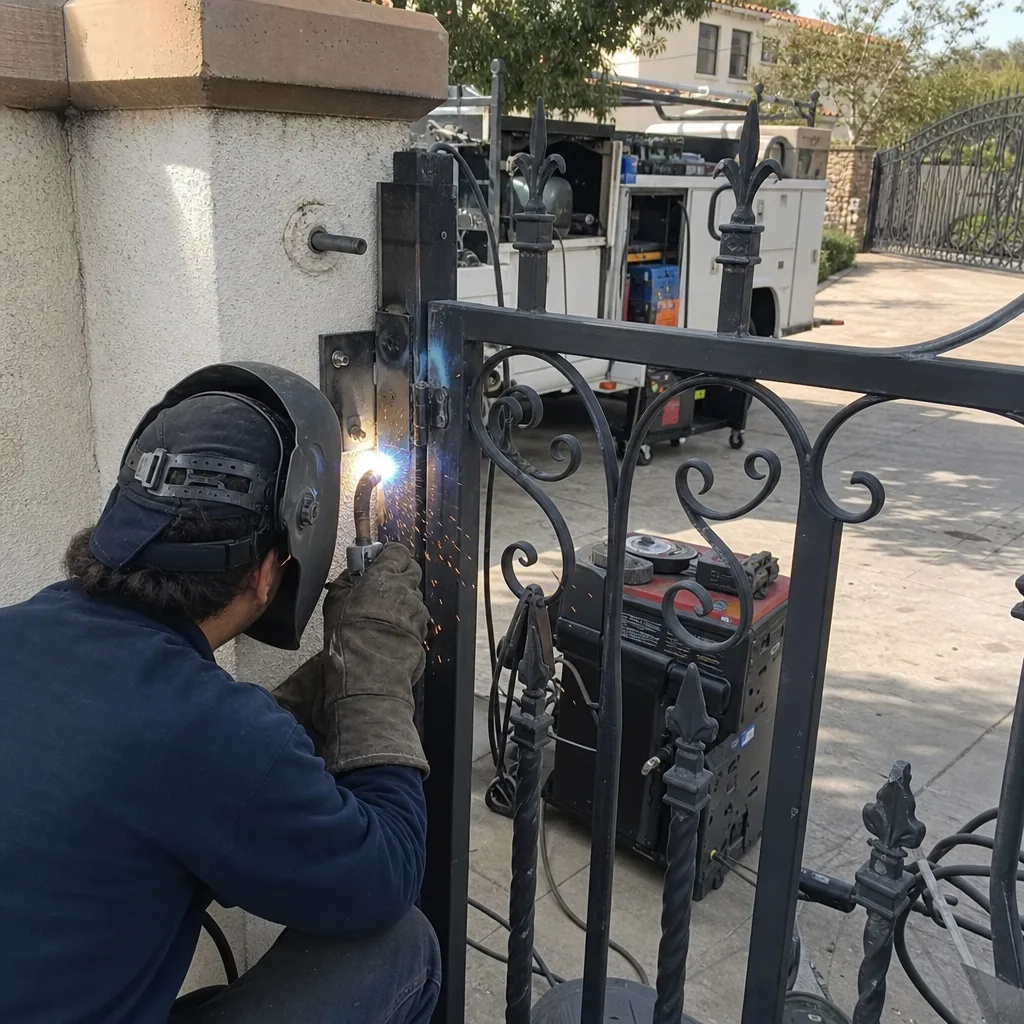
This is the question that separates the professionals from the parts-swappers: “What will you leave behind when the job is done?” The answer reveals more about a contractor’s process than any amount of salesmanship.
A parts-swapper leaves a hand-written invoice that says “gate repaired” and a phone number. A professional leaves a record. Specifically, ask about these three things:
- Wiring diagrams. If the contractor touched low-voltage wiring, they should leave a diagram showing what connects to what. Without it, the next technician has to reverse-engineer the work, which means you pay for the same diagnosis twice.
- Photos of the completed work. A photo log of what was found, what was adjusted, and what was installed. Under Clause 4 of the Haven Standard, every visit includes a documented photo record at no additional charge. You should expect the same from any contractor you hire in Rancho Cucamonga.
- Limit-switch readings. On an automatic gate, the limit switches tell the motor where to stop. A contractor who sets them and records the readings leaves you a baseline. A contractor who just eyeballs it leaves you a guess.
The documentation habit isn’t about paperwork for paperwork’s sake. It’s about never paying twice to rediscover the same problem. When a technician can see last year’s wiring diagram and know exactly what the previous repair changed, the diagnosis takes twenty minutes instead of two hours. You pay for the fix, not the archaeology. For a deeper look at how motor diagnostics work across different brands, see our Gate Motor & Opener in Rancho Cucamonga page.
Step 5: Structure a Payment Schedule That Protects You
Payment structure is where honest contractors and bad actors part ways. A legitimate gate repair company in Rancho Cucamonga works on a percentage schedule tied to milestones. A contractor who demands full payment upfront is asking you to fund their cash flow with all the risk on your side.
Here’s the payment structure that protects you:
- At signing: no more than 10-15% or the cost of ordered parts, whichever is less. This covers the contractor’s hard costs if you cancel after parts arrive. It should never be 50% of the total job.
- At parts delivery or mid-point: a progress payment tied to visible work. You should be able to see the parts on-site with your own eyes before paying for them.
- At completion: the remaining balance, paid only after the gate operates correctly. Test the gate through five full open-close cycles, check the photo-eye interruption, and listen for grinding or binding before you write the final check.
Paying in full upfront is the clearest red flag in this industry. It removes every incentive the contractor has to show up, finish the job correctly, or return when something fails. We’ve heard from Rancho Cucamonga homeowners who paid $2,400 upfront for a custom gate installation and spent the next four months chasing a contractor who had already moved on to the next deposit.
The same applies to deposit demands that exceed the cost of materials. If a contractor wants 60% down on a $3,000 repair where the parts cost $600, you’re financing their operation, not protecting yours. A written scope with a payment schedule attached is standard practice. Accept nothing less.
What Rancho Cucamonga Gate Repair Actually Costs
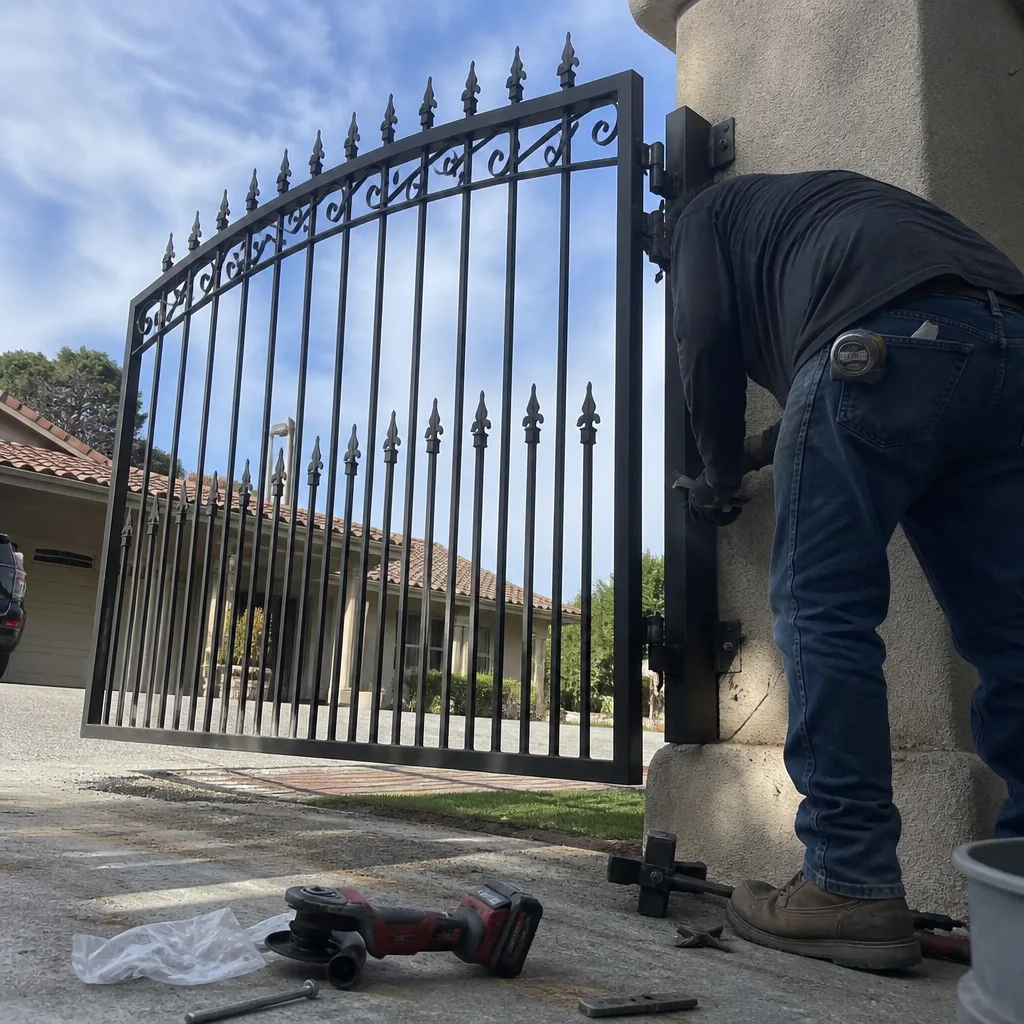
Pricing transparency is the fastest way to sort a serious contractor from a guesser. Someone who can’t quote a range for common repairs either hasn’t done enough of them or is hiding something. Here’s what gate work actually costs in the Rancho Cucamonga market right now, based on what we see across the Inland Empire.
Common gate repair price ranges in Rancho Cucamonga:
- Swing gate motor replacement: $950 – $2,400 depending on brand, weight rating, and whether the arm bracket needs rewelding
- Slide gate motor replacement: $1,100 – $2,800 depending on track condition and chain vs. rack drive
- Control board replacement: $350 – $900 depending on brand (DoorKing and FAAC boards run higher than Linear)
- Photo-eye repair or replacement: $150 – $450 including alignment and testing
- Hinge replacement on an ornamental steel gate: $300 – $850 for a pair, more if the gate post needs reinforcement
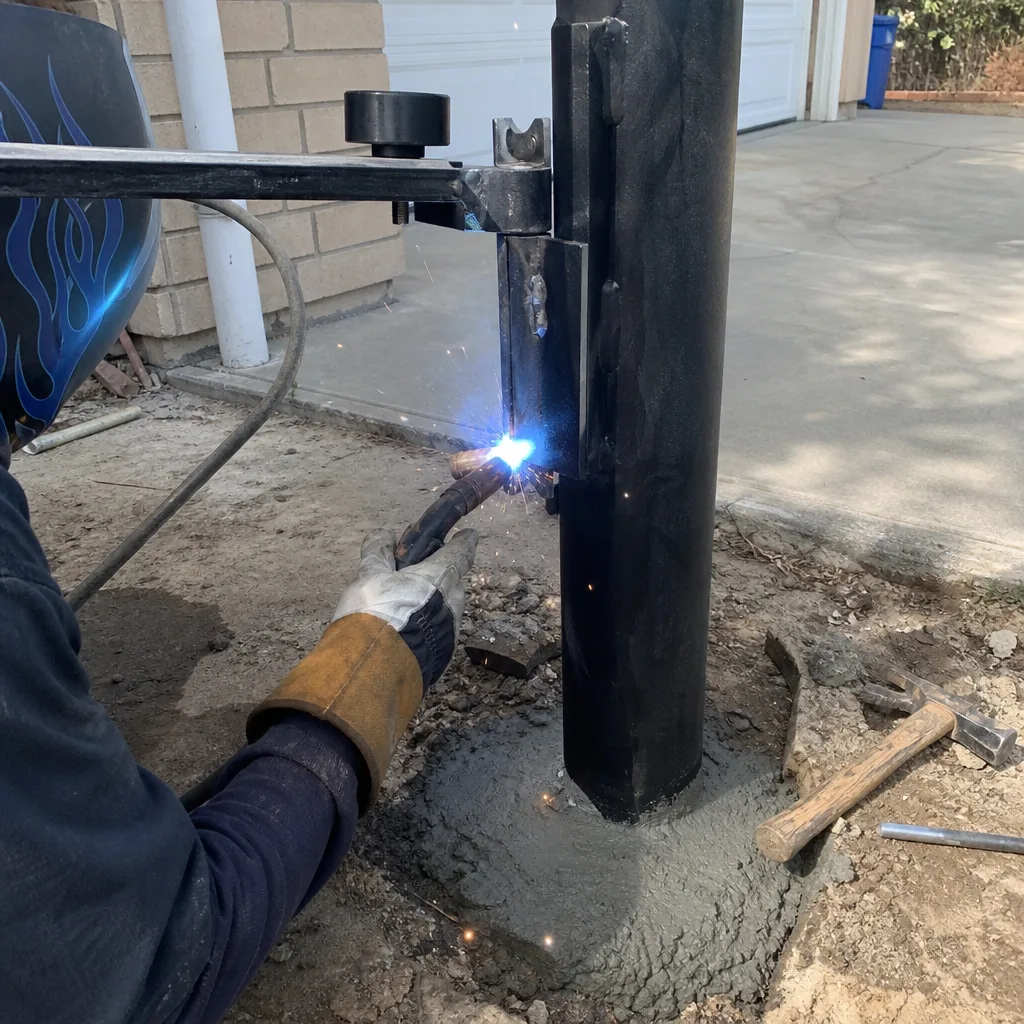
- Welding repair on a torn gate frame: $250 – $700 depending on the length and location of the crack
- Full operator replacement with new motor, board, and brackets: $1,800 – $4,500 depending on gate weight, brand, and access control integration
These ranges assume a functioning existing gate. If the gate itself is compromised, the cost shifts toward Gate Installation in Rancho Cucamonga territory, where fabrication and structural work enter the picture.
Seasonal Gate Repair Care for Rancho Cucamonga: Year-Round Homeowner’s Guide explains how Rancho Cucamonga’s climate plays a role here that flat-rate phone quotes don’t account for. The Santa Ana winds that push through the Cajon Pass carry fine dust that works into limit switches and control boards. Gates in the northern neighborhoods closer to the foothills see more of this than properties down in the flatlands. A contractor who has worked in the area knows to check the limit-switch housing for dust intrusion on a Viking or Elite operator that’s been on the property for more than four years. A phone-quote contractor doesn’t.
Questions to Ask During the Phone Call
Before you even schedule the site visit, the first phone call tells you most of what you need to know. A live person answering that call is itself a signal. If you get a voicemail loop or an automated attendant that kicks you to a callback queue, you’re already learning something about how that company handles the next problem you’ll have.
Here are the six questions that separate a contractor who will leave a paper trail from one who won’t:
- “What’s your CSLB license number?” Write it down. Verify it on the CSLB website before the technician arrives. If they stammer, deflect, or say they’re “in the process of getting it,” the conversation is over.
- “Will the price be in writing before any work starts?” This is a yes or no question. “We’ll see once we open it up” without a written cap is a no.
- “What brand of operator do you work on?” If the answer is “all of them, no problem,” be skeptical. A technician who works on nine major brands (including Viking, Ghost Controls, DoorKing, and Elite) has seen the failures. A technician who only installs one brand will steer you toward replacing whatever you have.
- “What documentation do I get when the job is done?” Look for: photos, a written scope of what was repaired, part numbers, and ideally readings like limit-switch positions. “You get a receipt” is the wrong answer.
- “What’s your warranty and how do I enforce it?” A real warranty has a stated duration and a written policy. “We stand behind our work” is not a warranty. “One year in writing, no fee to come back” is.
- “Who’s the technician coming to my property?” A company that gives you a name and photo before arrival is a company with an actual dispatch process. A company that sends whoever happens to be available can’t tell you who’s knocking on your door.
One more thing: pay attention to how the person on the phone talks about pricing. A contractor who can quote a range for a swing-gate motor replacement without “running the numbers” is quoting from experience. A contractor who can’t give you any number at all is planning to figure it out after they see your house and your gate. That’s not diagnosis. That’s leverage.
Common Mistakes to Avoid
- Hiring before checking the license. The two-minute CSLB search is the highest-return verification step in this entire process. Skipping it means finding out about the missing D-28 classification when the manufacturer voids your warranty claim.
- Accepting a verbal estimate as a final price. In Rancho Cucamonga, verbal-only pricing is how $350 driveway quotes become $1,900 invoices. If it’s not in writing, it doesn’t exist when the dispute starts.
- Paying in full upfront. A contractor who needs 100% before starting the work is one job away from disappearing. You’re not a bank.
- Not asking for proof of insurance. General liability insurance protects you when someone gets hurt on your property during the job. A contractor without it leaves you holding the claim.
- Choosing the cheapest quote without comparing scopes. A $900 repair quote and a $1,600 repair quote aren’t for the same job if the first one doesn’t include the control board. Compare the written scope, not just the final number.
- Ignoring the documentation question. If you don’t ask what gets left behind, you get a receipt that says “gate repaired” and a phone number that no longer works when the same failure returns in eight months.
- Skipping the five-cycle test at completion. Run the gate through five full cycles, block the photo-eye, and listen. Two minutes of testing at handover saves you from discovering the problem the next morning.
When to Call a Professional
Gate repair in Rancho Cucamonga becomes a professional job the moment the motor, control board, or load-bearing hardware is involved. If the gate is drifting out of alignment on its track, if the motor strains against the load, if the photo-eye intermittently fails to reverse, or if you hear grinding from the gearbox, those are not DIY moments. Automatic gates are heavy, the springs and hinges are under constant tension, and a compromised safety circuit is a liability waiting to happen. The photo-eye that fails to reverse because of a bad sensor is the difference between a gate that stops and a gate that doesn’t. That’s not a repair to learn on. Vance Gate Repair Rancho Cucamonga offers free estimates in Rancho Cucamonga. Call (909) 764-3720 and speak to a live person, day or night, no voicemail loop. The written price comes before any work starts, under the Haven Standard we’ve applied to every job since 2014.
Frequently Asked Questions
Go to the CSLB website, click License Check, and enter the contractor’s license number. Confirm the license is active and that it carries the C-61/D-28 classification, which is the only license that legally covers automatic gate work in California. An expired or suspended license will appear in red on the results page, and a license without the D-28 classification means the contractor isn’t legally authorized to touch your gate operator.
Most our Gate Repair services in Rancho Cucamonga run between $150 for a simple photo-eye replacement and $2,400 for a swing-gate motor replacement, with full operator replacements ranging from $1,800 to $4,500 depending on gate weight, brand, and accessories. The only way to know your exact price is a written scope from a contractor who has actually diagnosed the gate. Call (909) 764-3720 for a free estimate with the price in writing before any work starts.
No. A legitimate payment schedule caps the initial deposit at 10-15% or the cost of ordered parts, whichever is less, with progress payments tied to visible milestones and the final balance due only after the gate operates correctly through five full cycles. Paying in full upfront is the clearest red flag in the gate repair industry.
A serious gate contractor in Rancho Cucamonga works on multiple brands rather than steering you toward one replacement. Look for experience with LiftMaster, Viking, Ghost Controls, DoorKing, Elite, FAAC, BFT, Linear, and Mighty Mule. A contractor who only works on one brand is selling that brand, not servicing your gate.
A written scope of work specifies exactly what gets repaired or replaced, with model numbers, before any work begins. It prevents the verbal estimate from ballooning after the gate is opened up, and it gives you a document you can hold the contractor to if the repair fails within the warranty window.
Yes. General liability insurance protects you if the contractor damages your property or someone is injured on the job. Ask for the certificate of insurance and confirm with the carrier that the policy is active. A contractor who can’t produce proof of insurance is telling you exactly how much risk they’re comfortable leaving on your property.
The Bottom Line
Hiring a gate repair contractor in Rancho Cucamonga comes down to one question: does this person leave a paper trail or not. For more guides & resources, visit our blog. A C-61/D-28 license you verify yourself, four documents before signing, a written price, a payment schedule tied to milestones, and a documented record when the work is done. Those are the things that protect you. The handshake estimate, the verbal price, the cash discount, the “we’ll see once we open it up.” Those are the things that cost you. Rancho Cucamonga homes have gates worth protecting. The contractor you hire should treat that gate like the structural asset it is, not like a cash register. Call (909) 764-3720 for a free estimate with the price in writing before any work starts.
Written by Adrian Vance, Owner at Vance Gate Repair Rancho Cucamonga, serving Rancho Cucamonga since 2014.