
Last updated September 20, 2026
Free on-site gate assessment - hinges, posts, and your LiftMaster or Nice gate operator checked before anything is quoted
The assessment is free and the quote is the invoice.

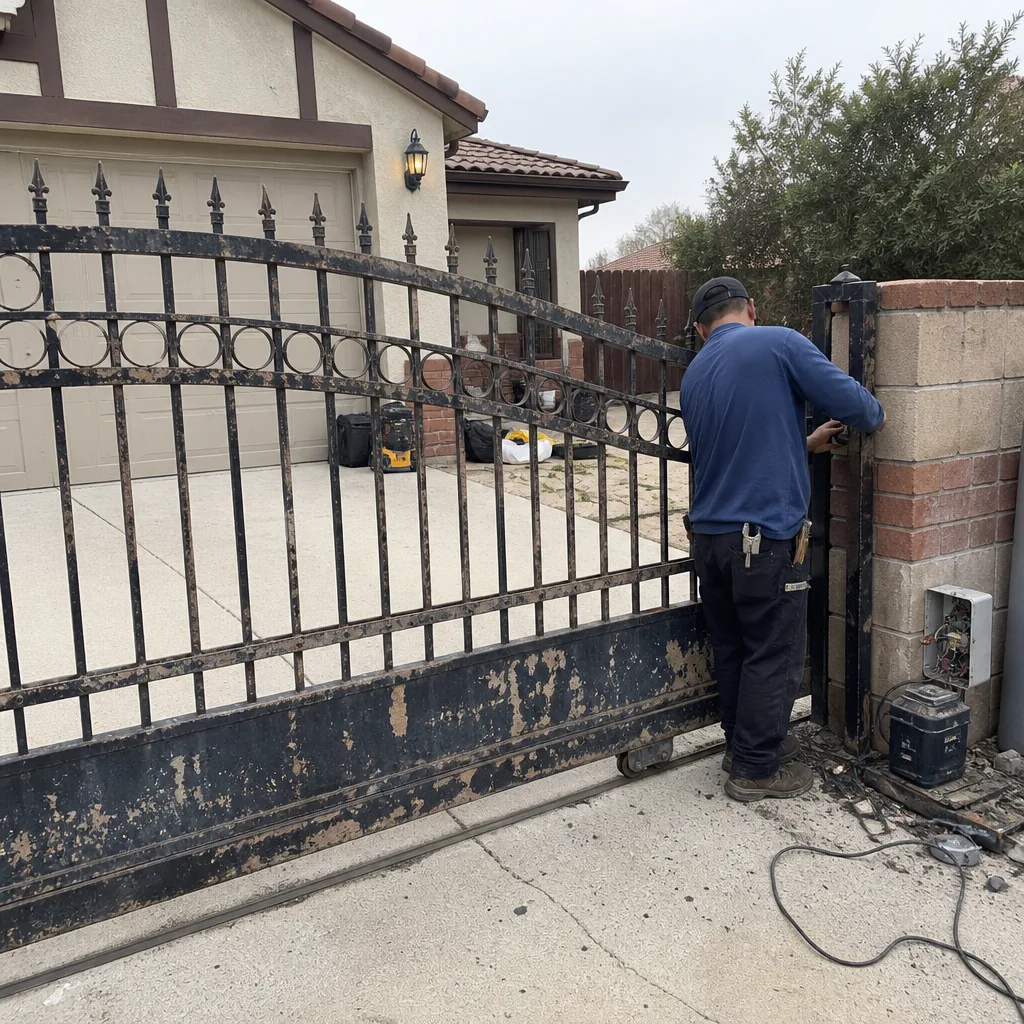 Before
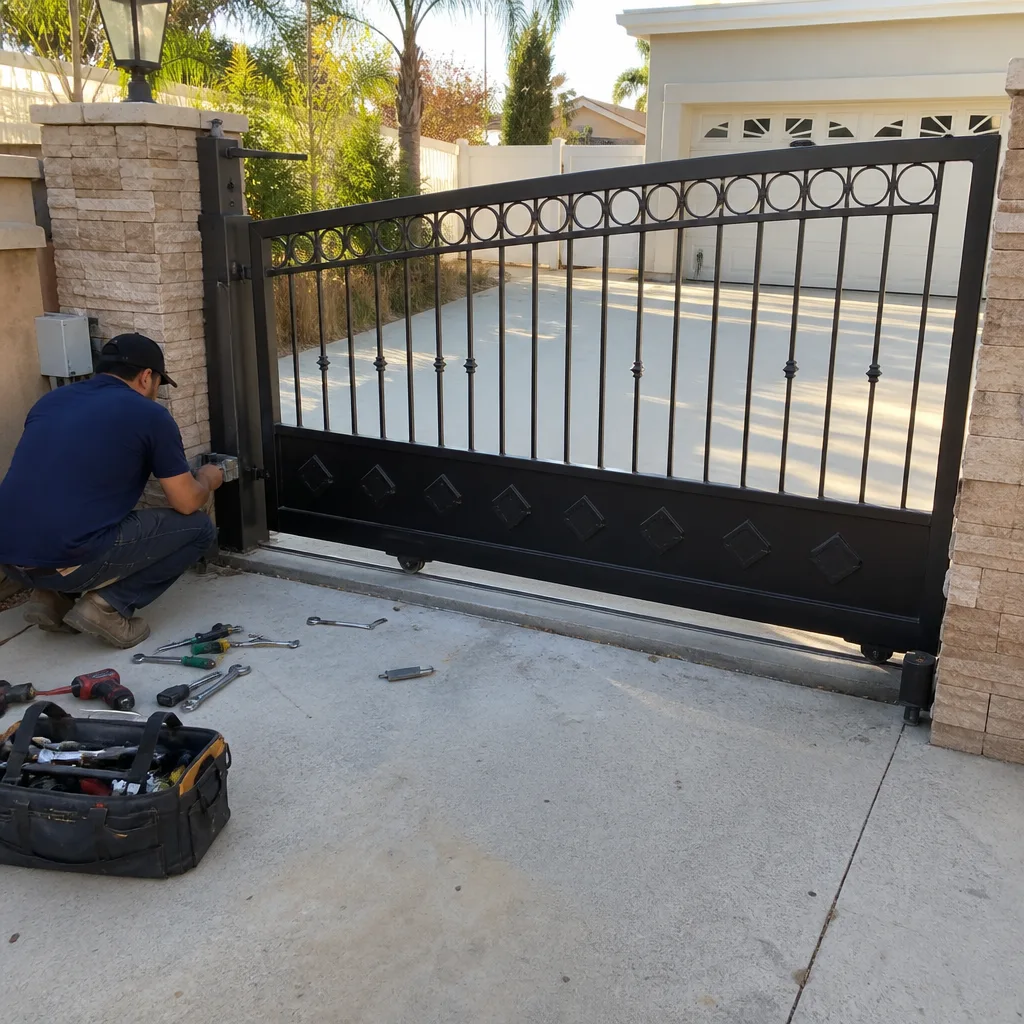 After
After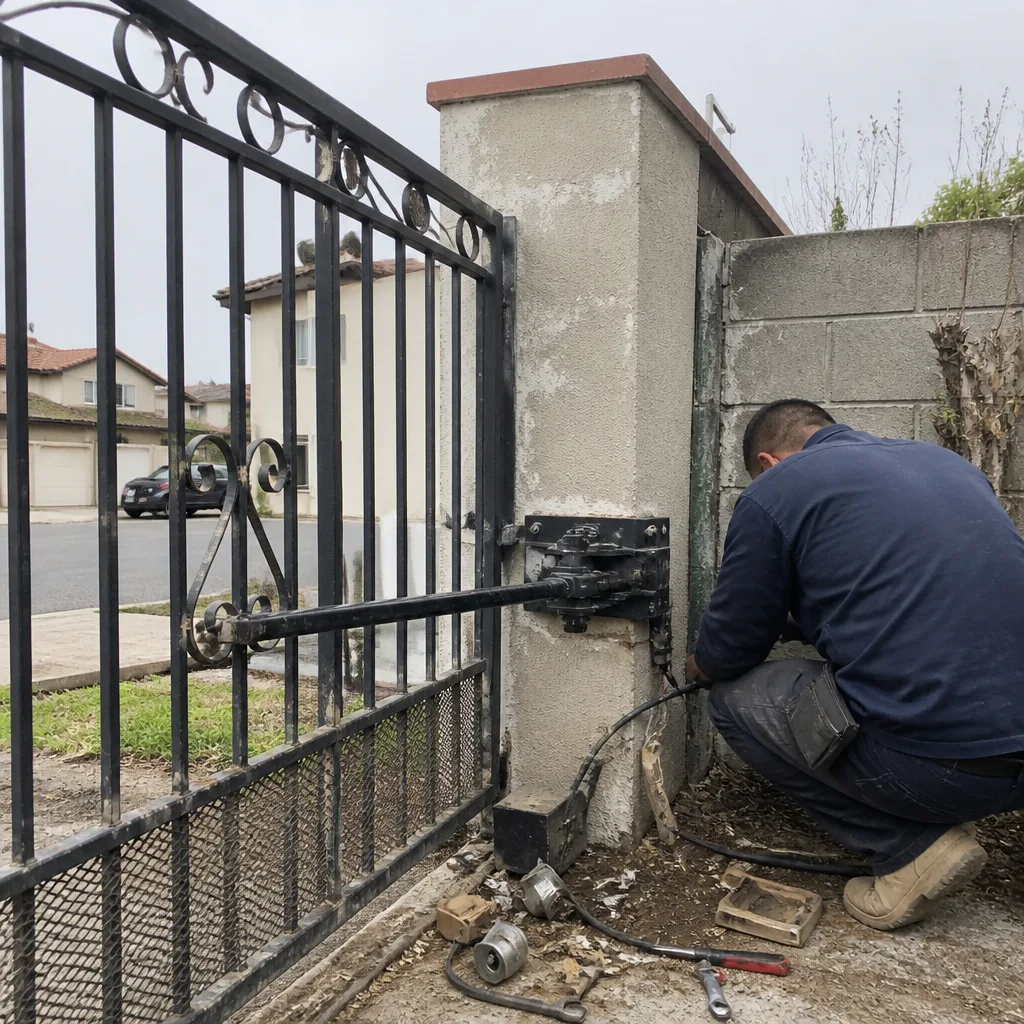 Before
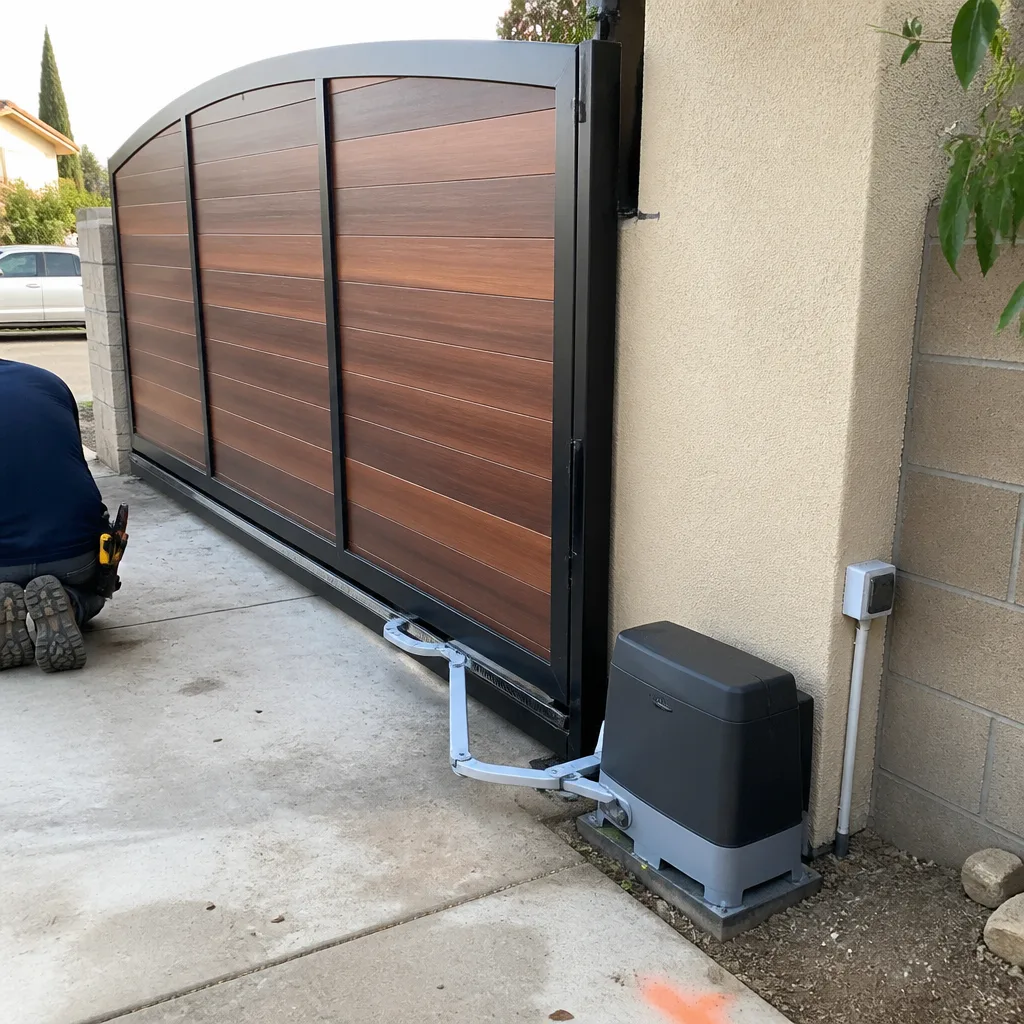 After
After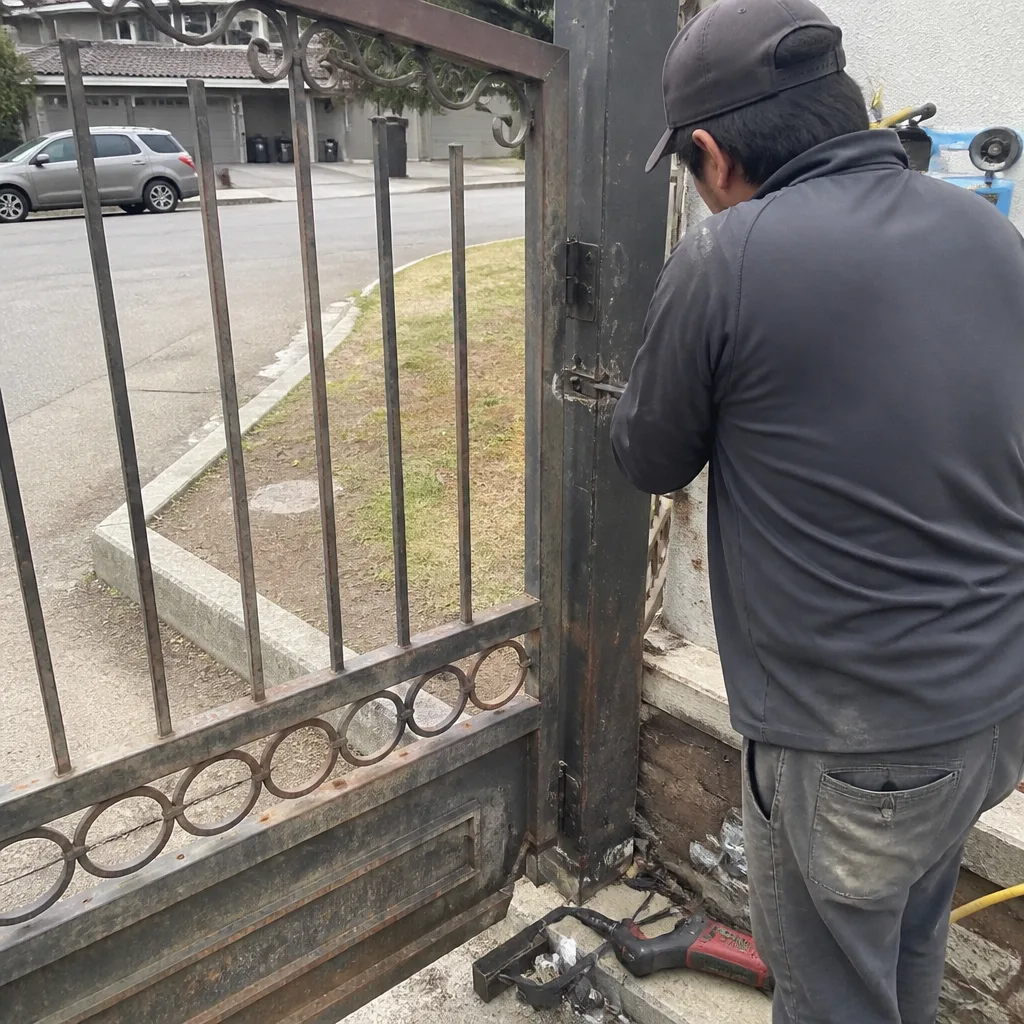 Before
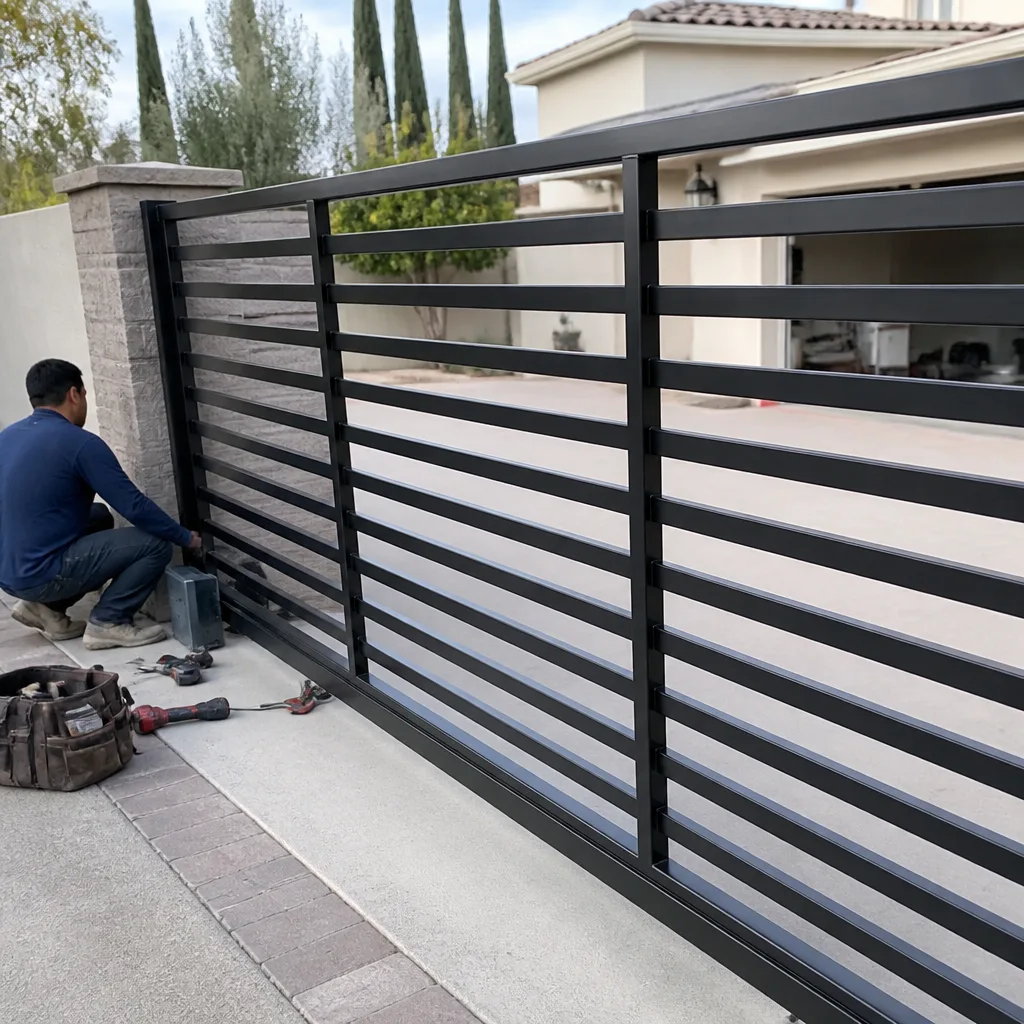 After
AfterSeasonal Gate Repair Care for Rancho Cucamonga: Year-Round Homeowner’s Guide
Santa Ana wind events in the Inland Empire regularly hit 60 to 70 mph, and a gate that is perfectly calibrated in July will slam against its stop bolt in October. Not because anything broke. Because wind load on the gate panel changes the effective torque the operator needs to close it, and most residential operators are not adjusted for that. This guide maps the two real mechanical stress periods in Rancho Cucamonga, the summer heat cycle and the Santa Ana season, and shows you what to check, what to adjust, and what to document throughout the year. For deeper detail, see The Complete Guide to Gate Repair in Rancho Cucamonga.
Quick Answer
Seasonal gate care in Rancho Cucamonga means planning around two stress periods: the summer heat cycle from June through September, when control boards and motor capacitors fail from sustained temperatures above 95°F, and the Santa Ana wind season from October through December, when wind load on the gate panel changes operator torque requirements and damages stop bolts and post welds. A simple visual and audio inspection twice a year, timed to March and September, prevents most emergency gate repairs in this climate.
Table of Contents
- Summer Heat in Rancho Cucamonga: What Fails When It Stays Above 95°F
- Santa Ana Season: Wind Load, Torque, and What Over-Torque Damage Looks Like
- Winter Rain in Rancho Cucamonga: Slide Gate Tracks, Drainage, and Buried Wiring
- Spring Maintenance: The Right Time to Re-Photograph and Re-Calibrate
- Month-by-Month Task Calendar for Rancho Cucamonga Gate Owners
- Why Documentation Matters: Photo Records and Written Notes
- How Your Gate Type Changes the Seasonal Workload
- Common Mistakes to Avoid
- When to Call a Professional
- Frequently Asked Questions
- The Bottom Line
BeforeAfterSummer Heat in Rancho Cucamonga: What Fails When It Stays Above 95°F
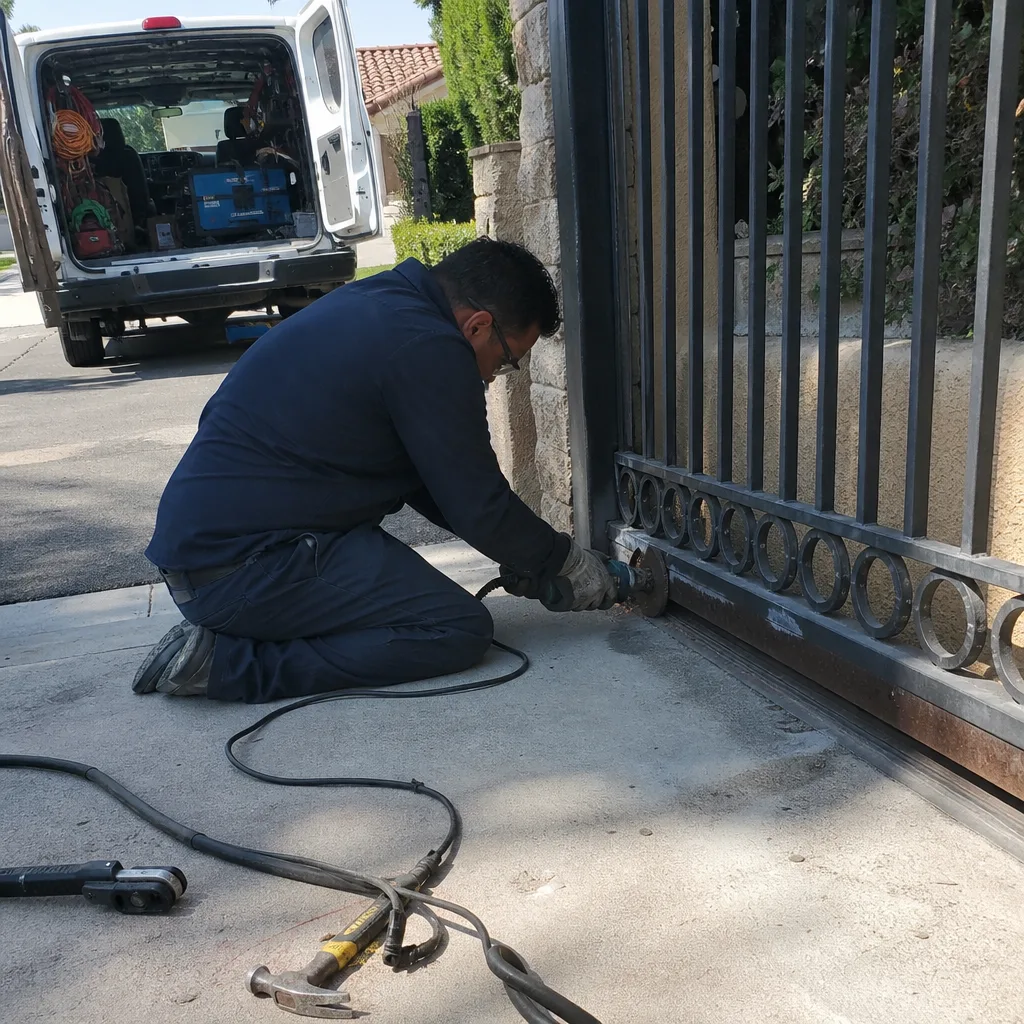
Rancho Cucamonga sees sustained summer temperatures above 95°F for weeks at a time, and the component that fails most predictably in that heat is the circuit board inside the gate operator control box. Most residential control boards are rated for operation up to 140°F internal temperature, but that rating assumes the control box has air circulation. An enclosed metal box mounted on a west-facing brick pillar in direct afternoon sun can reach 150°F or higher inside, and when a control board runs at its upper thermal limit for weeks, the solder joints expand and contract until a connection cracks. The symptom is a gate that works in the morning and quits in the afternoon, then works again after sundown. That is not a mystery failure. That is a thermal intermittent, and it is one of the most common calls we get in July and August.
The practical maintenance task is not complicated: shade the control box. A simple enclosure shade, a piece of opaque material mounted a few inches away from the box so air still moves, or repositioning the box if it is a new installation, all reduce the internal temperature enough to extend the board’s life. This applies to motors and operators across brands. We see the same thermal failure pattern on LiftMaster, FAAC, and Linear residential units. The brand matters less than the installation location. A control box in full afternoon sun is a replacement waiting for the hottest week of the year.
Capacitors are the second heat casualty. A motor start capacitor stores the electrical charge that gets the motor spinning, and heat degrades the dielectric material inside it. When a gate moves slowly, hums without turning, or trips its breaker on a hot afternoon, the capacitor is the first thing to check. In our experience, capacitors in Rancho Cucamonga gate operators get replaced more often in heat season than in any other window. You can listen for it: a gate that used to move in eight seconds and now takes twelve while making a deeper hum is a gate with a weakened capacitor.
Three heat-season checks you can do in ten minutes
- Touch the control box surface. If it is painfully hot to the back of your hand at 3 p.m., the board inside is warmer than the box, and that is a problem to address before the board fails.
- Watch the gate cycle once at midday. Listen for a slower travel speed or a change in motor pitch compared to what you hear in the cooler morning.
- Look at the operator’s housing seams. Heat accelerates plastic embrittlement, and small cracks at screw bosses or hinge points are the first sign that the housing is failing. A cracked housing lets dust and spiderwebs into the gearbox, and that is a repair, not a cleaning job.
None of this requires opening the operator. That is deliberate. The electrical components in a gate operator carry line voltage and stored capacitor charge, and the safety standard is to leave internal inspection to a technician. What a homeowner should do is observe, listen, and record. That record becomes the baseline that makes a future repair faster and cheaper. For a deeper look at what we check during a full evaluation, our Gate Repair in Rancho Cucamonga page walks through the process.
Santa Ana Season: Wind Load, Torque, and What Over-Torque Damage Looks Like
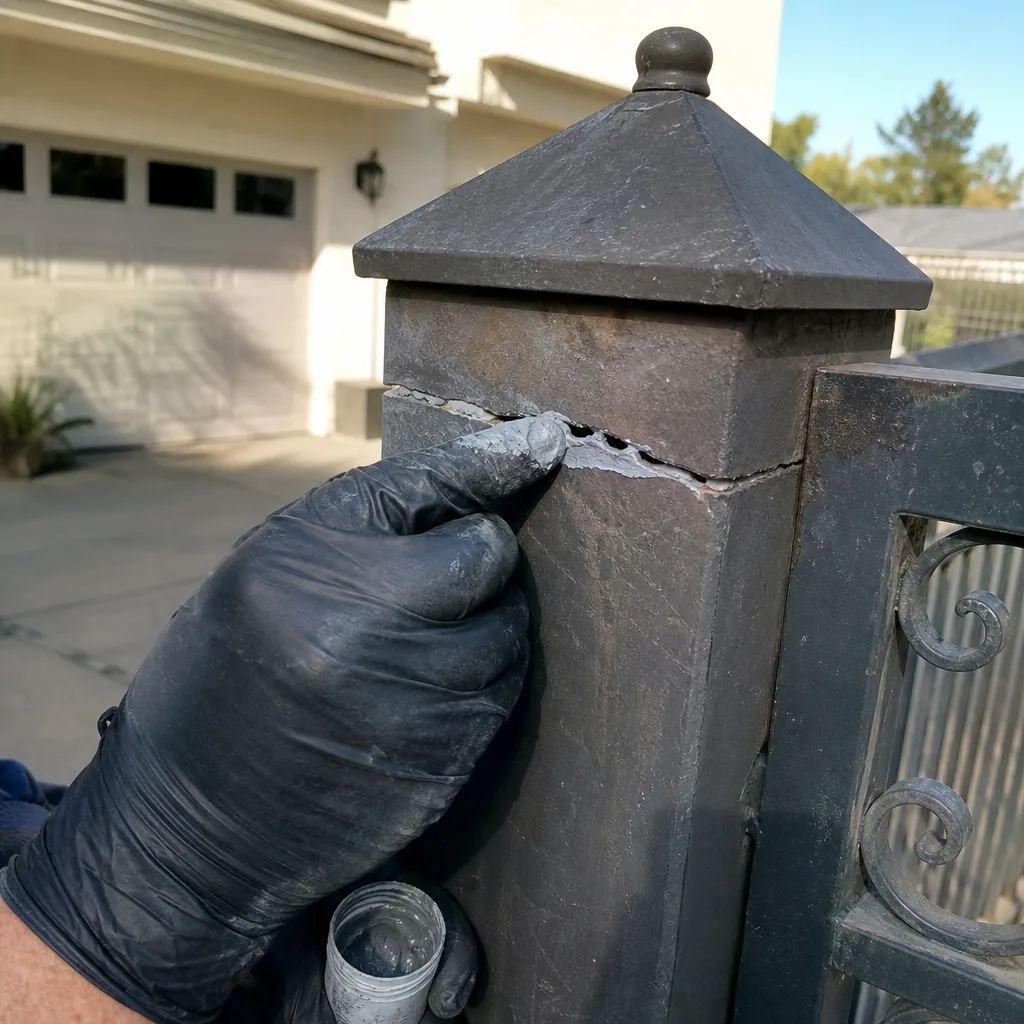
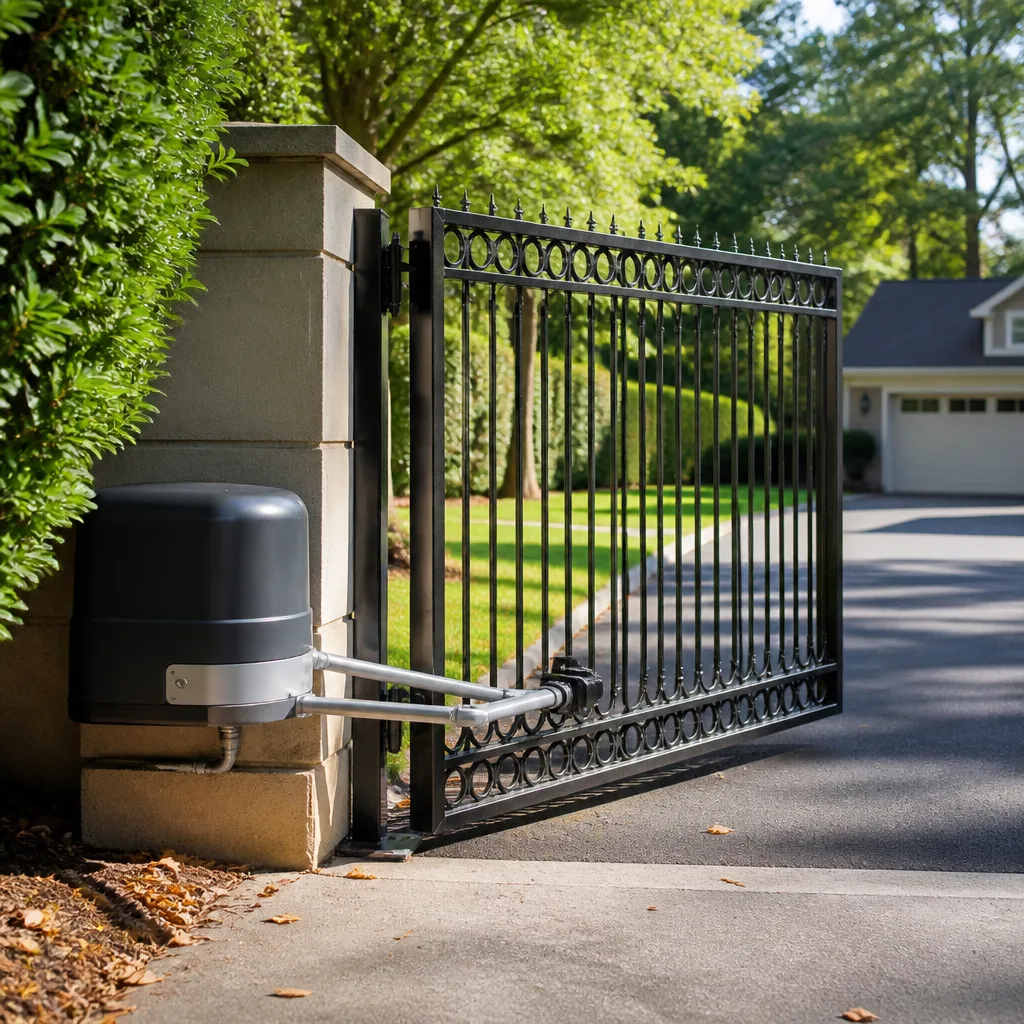
Santa Ana winds blow down through the Cajon Pass and hit the Rancho Cucamonga foothills with gusts that load a gate panel like a sail. A seven-foot-wide solid steel gate facing the wind can see hundreds of pounds of force on the panel, and all of that force transfers through the hinge, the operator arm, and the stop bolt. The operator does not know the difference between a gust and an obstruction, so it pushes harder. The torque setting that closed the gate perfectly in July now overdrives it into the stop, and that overdriving is what bends stop bolts, cracks post welds, and eventually shears operator arms.
The maintenance task before wind season is a torque review. Most residential operators have an adjustment dial or software setting for force sensitivity, and the goal heading into October is to set it so the gate closes against normal resistance and stops on contact with the stop bolt without slamming. If the gate bounces off the stop bolt when it closes, that is over-torque. If you hear a metallic bang at the end of travel, that is over-torque. If the post cap is loose or the weld at the post base shows a hairline crack, that is the accumulated result of months of over-torque, and it will get worse in the first Santa Ana event.
We adjust torque settings on FAAC and BFT residential operators regularly in early October, and the photo-eye is part of the same wind-season prep. A photo-eye is the infrared beam across the gate opening that stops the gate if something crosses the path. In high wind, leaves, tumbleweeds, and dust cross the beam constantly, and an operator that interprets every gust-blown leaf as an obstruction will stop mid-cycle and reverse. The beam needs to be cleaned and aligned, and the sensitivity checked, before wind season. A misaligned photo-eye by as little as two inches causes nuisance reversals that read as a broken gate to most homeowners.
What over-torque damage looks like, component by component
- Stop bolt: A slight bend or a flattened contact face where the gate hits it. Over-torque presses the gate into the bolt with more force than intended, and the bolt deforms first.
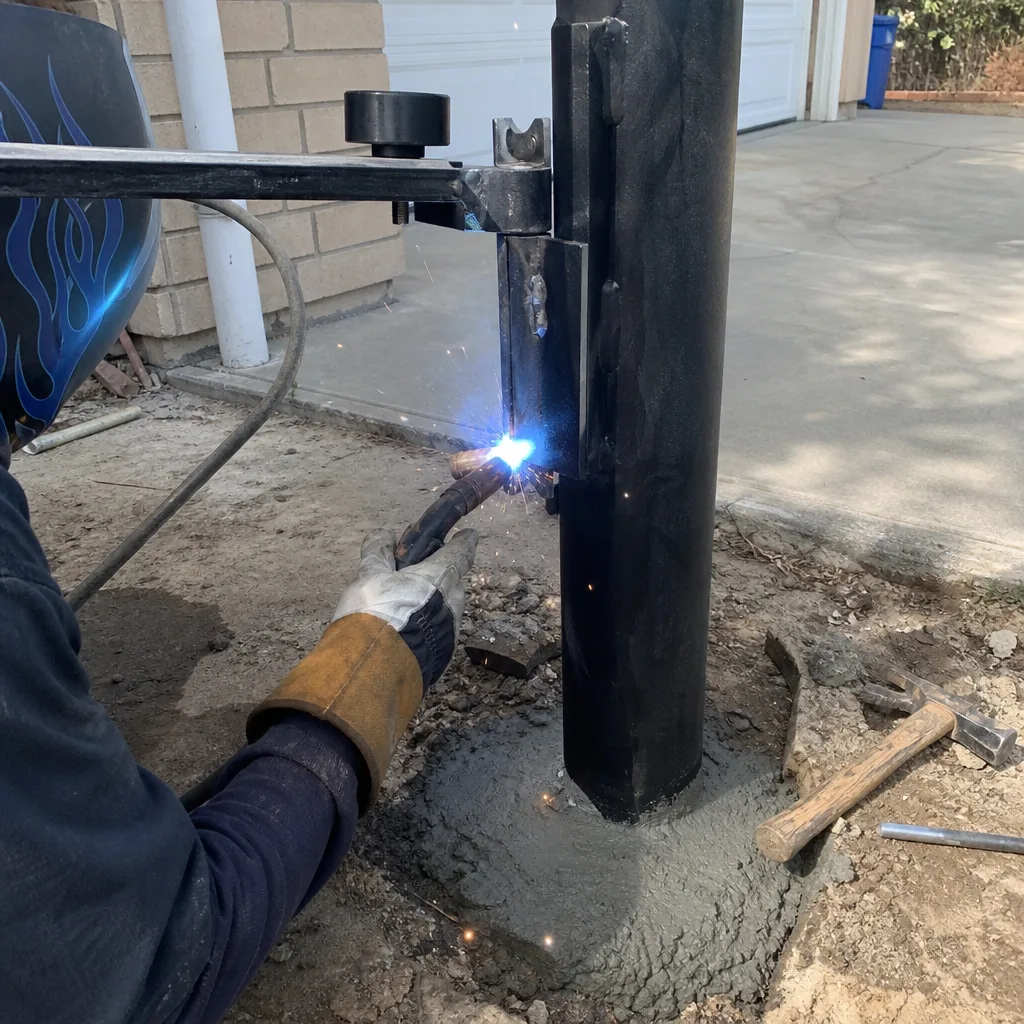
- Post weld: Hairline cracks at the heat-affected zone where the hinge post meets its base plate. Over-torque transmits the gate’s kinetic energy into the post, and the weld is the weakest point.
- Operator arm: Elongation of the mounting holes or a worn pivot bushing. The arm takes the mechanical load from the operator to the gate, and repeated slamming enlarges the holes until the arm develops play.
- Limit switch: Drift from repeated hard stops. The limit switch tells the operator where the travel ends, and slamming into the stop bolt can knock it out of calibration by several degrees.
If any of these are visible, the fix is not just a new bolt or a reweld. The torque setting has to come down or the new part fails the same way within a year. That is the difference between a repair that lasts and a repair that returns. Our Gate Motor & Opener in Rancho Cucamonga page explains how we set and document torque on every motor we service.
Winter Rain in Rancho Cucamonga: Slide Gate Tracks, Drainage, and Buried Wiring
Rancho Cucamonga gets most of its annual rain in a handful of events between January and March. A slide gate on a track does not think in terms of annual averages. It thinks in terms of standing water. When rain is heavy enough to pool around the track, two things happen: the wheels drag through water and silt instead of rolling cleanly, and the motor works harder to push the gate through the resistance. The operator compensates by drawing more current, which heats the motor and shortens its life. Repeated soakings also wash fine sediment into the track channel, which grinds the wheel bearings over the following weeks. A slide gate that moves smoothly in November and jolts in January is a slide gate with sediment in its track or water in its rollers.
The drainage check is simple and belongs on every fall list in Rancho Cucamonga. Look at the path water takes during the next rain event. If water sheets across the driveway and pools at the track, the fix is usually grading, a shallow drain channel, or a gap in the track bed, not a new gate. On properties in the northern foothills where runoff comes down from the higher lots, the volume can be enough to undercut the track bed over two or three seasons. Under a concrete track set in a shallow bed, the ground softens, the track shifts slightly, and the gate starts binding at one point in its travel. That binding is a signal to check what is happening under the track, not just on top of it.
Underground wiring is the quieter casualty. Power and control wire that runs from the house or a pedestal to the operator is typically buried in conduit, and conduit joints are not always water-tight after a decade in the ground. When standing water sits over a conduit joint for a week, water creeps in, and the wire insulation wicks that moisture. The failure does not happen that season. It happens months later, when a ground fault trips the breaker or the control board behaves erratically. In our experience, the electrical faults we trace to moisture in Rancho Cucamonga took root during a previous winter’s rain. Documentation matters here: if a technician notes that a conduit joint was damp in March, that note saves the next technician hours of diagnosis in July.
Spring Maintenance: The Right Time to Re-Photograph and Re-Calibrate
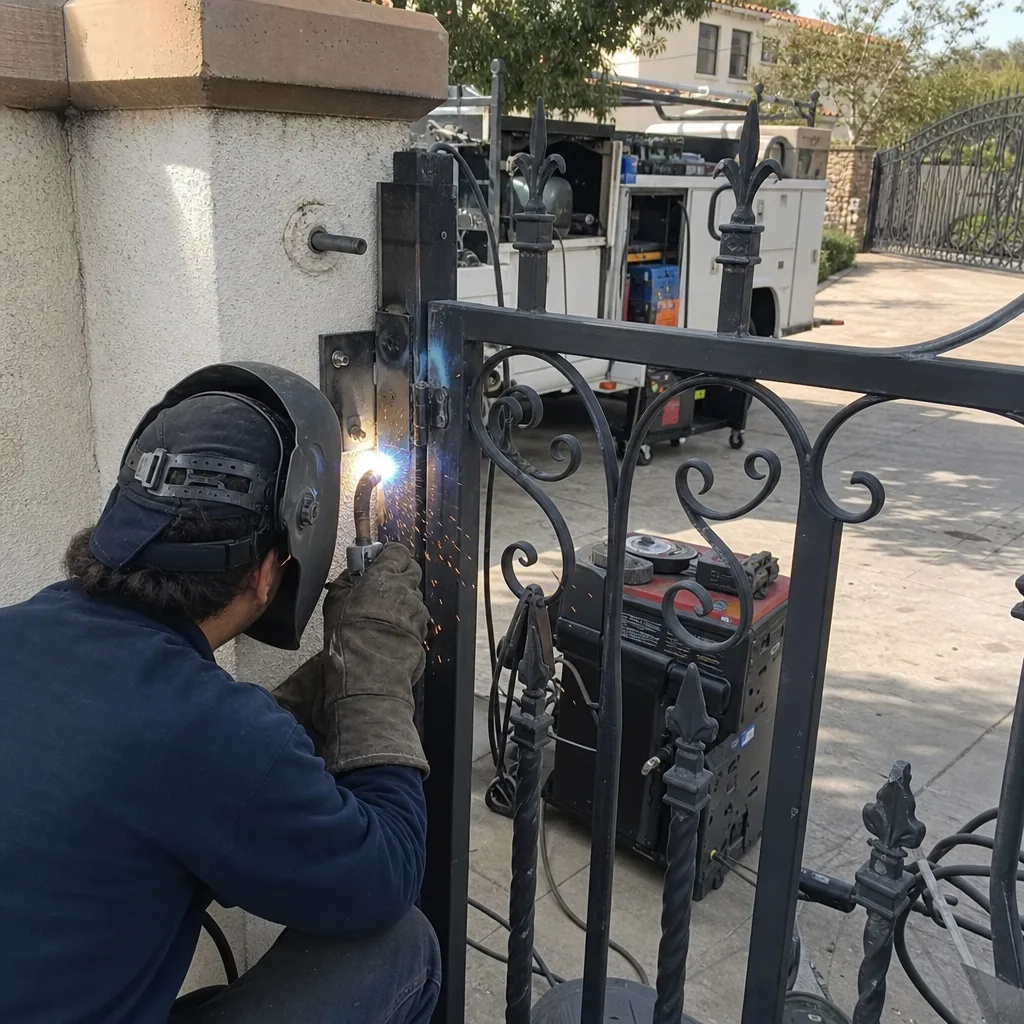
April and May are the reset window in Rancho Cucamonga. The rain has stopped, the heat has not peaked, and the gate is in the best condition it will be all year. This is the correct time to re-photograph the full open and close cycle and add those photos to your maintenance record. A phone camera held at eye level, shot from the same position each time, gives you a consistent visual baseline. When something changes later, you have a reference to compare against.
The spring sequence is deliberately simple:
- Photograph the gate in six positions: fully closed, one-third open, two-thirds open, fully open, two-thirds closed, and one-third closed. These capture the gate’s geometry so a future sag or track shift is visible against the baseline.
- Photograph the operator, the control box, and the photo-eye. Include the mounting hardware in the frame. If a bolt backs out over the summer, the before-and-after comparison shows it.
- Record the open and close travel times. Use a phone stopwatch. Most residential gates open in eight to fifteen seconds. A change of more than two seconds from the previous reading is a diagnostic clue.
- Write down what you changed, if anything. Even if the answer is “nothing,” that entry matters. A maintenance log with no entries for three years tells a technician exactly as much as a log full of them.
This spring documentation habit is the same discipline we apply on every job we do. Under The Haven Standard, each visit leaves a photographed record of what was found, what was adjusted, and what was replaced. You can build that same record at home with a phone and ten minutes in April. The value shows up in October, when a gate that slammed against its stop bolt in the Santa Ana wind can be compared to its spring baseline, and the difference tells us whether to adjust torque, replace a bushing, or reweld a post. Adrian Vance built that habit on commercial access-control sites starting in 2014, and it transfers directly to residential gates in Rancho Cucamonga.
Month-by-Month Task Calendar for Rancho Cucamonga Gate Owners
This calendar is written for the Inland Empire climate, not a national template. Rancho Cucamonga does not have four equal seasons. It has heat, wind, rain, and a brief reset window. The tasks below are sized for a homeowner with a phone camera and ten minutes a month.
- January: Watch the gate during the next rain event. Note where water pools around the track or the operator pad. Photograph the pooling, not just the gate.
- February: Check the slide gate track for sediment and debris. A stiff brush works. Do not pressure-wash the operator or the photo-eye.
- March: After the last rain, look at conduit and junction boxes for moisture or cracking. Replace any weather seal that has hardened.
- April: Complete the spring photo sequence: six gate positions, operator, control box, photo-eye, and travel times.
- May: Test the photo-eye alignment. The beam should be clean and level. Watch the gate cycle and listen for any change in motor pitch.
- June: Check the control box for direct afternoon sun exposure. Install a shade if the box is too hot to touch at 3 p.m.
- July: Listen for a slower motor or a deeper hum. Compare to April. A two-second slowdown is a signal to schedule a capacitor and board check.
- August: Look at the gate hinges and operator arm for play. Small movements at the mounting points grow through the rest of the year.
- September: The wind prep window opens. Check the stop bolt for bends or flattening. Check the post welds for hairline cracks.
- October: Adjust torque for wind load if you are experienced with your operator, or schedule a technician to do it. Clean and align the photo-eye.
- November: First Santa Ana event. Watch the gate in the wind. If it slams at end of travel, the torque is too high, and that needs attention before December.
- December: End-of-year reset. Empty the maintenance log, compare the year’s photos, and schedule one professional inspection to catch what the photos missed.
Why Documentation Matters: Photo Records and Written Notes
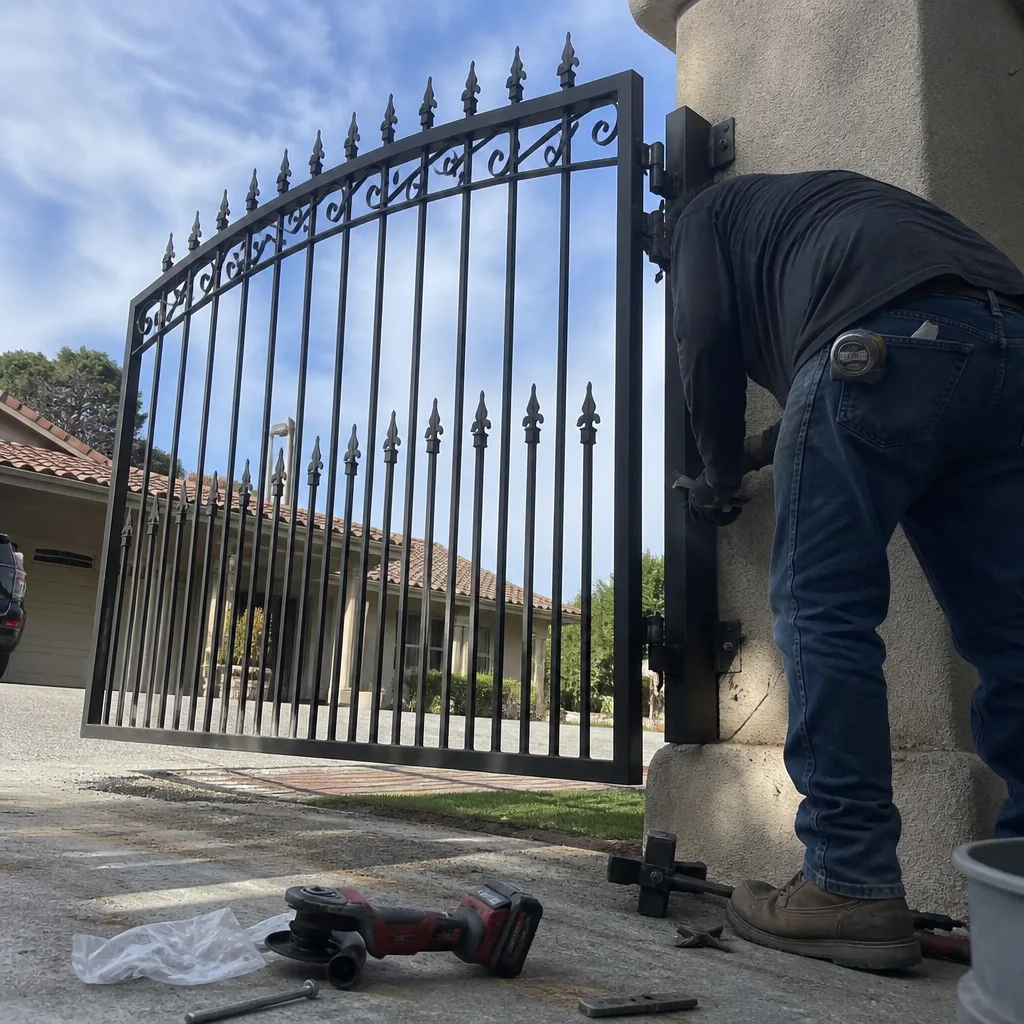
Every gate has a history, and most of that history is lost. A homeowner who has lived with a gate for eight years rarely has a single photo of it from year to year, which means a technician seeing that gate for the first time has no way to know whether the slight sag is new or five years old. That gap costs money. The technician has to investigate from scratch, and investigation time is billable time. A simple photo and written record, maintained seasonally, changes that.
The record we recommend is two things: a photo set taken in the same positions twice a year, and a written note that says what changed. The note can be three lines. “April 14: gate opens in ten seconds. Photo set taken. No changes.” That entry is gold in January when the gate starts binding and the question is whether the problem began in summer heat, fall wind, or winter rain. Without the April note, the technician assumes the worst and starts from zero. With it, the diagnosis narrows immediately.
This is the principle behind The Haven Standard. Clause 4 requires evidence on every job: a documented photo record of what was found, what was adjusted, and what was installed. When we leave a job in Rancho Cucamonga, the homeowner has the same evidence we have. If a future technician opens the control box, the wire labels and settings are there. If a limit switch was set in October, the position is photographed and noted. Nothing gets rediscovered, and nothing gets paid for twice. You can find our Vance Gate Repair Rancho Cucamonga home page for more on how that standard works in practice.
How Your Gate Type Changes the Seasonal Workload
Swing gates and slide gates fail in different seasons in Rancho Cucamonga, and knowing which type you have tells you where to aim your attention.
Swing gates take the full force of the wind on their face. When a Santa Ana gust hits a closed swing gate, the panel pushes against the stop bolt and the post. When it hits an open gate mid-cycle, the operator fights the gust to keep the panel moving. The failure points on swing gates are the stop bolts, the post welds, the operator arm bushings, and the operator’s internal gearbox. Heat season adds capacitor and board stress. Wind season adds mechanical stress. Rain season is mostly irrelevant to a swing gate unless the operator is mounted at ground level and water pools around it.
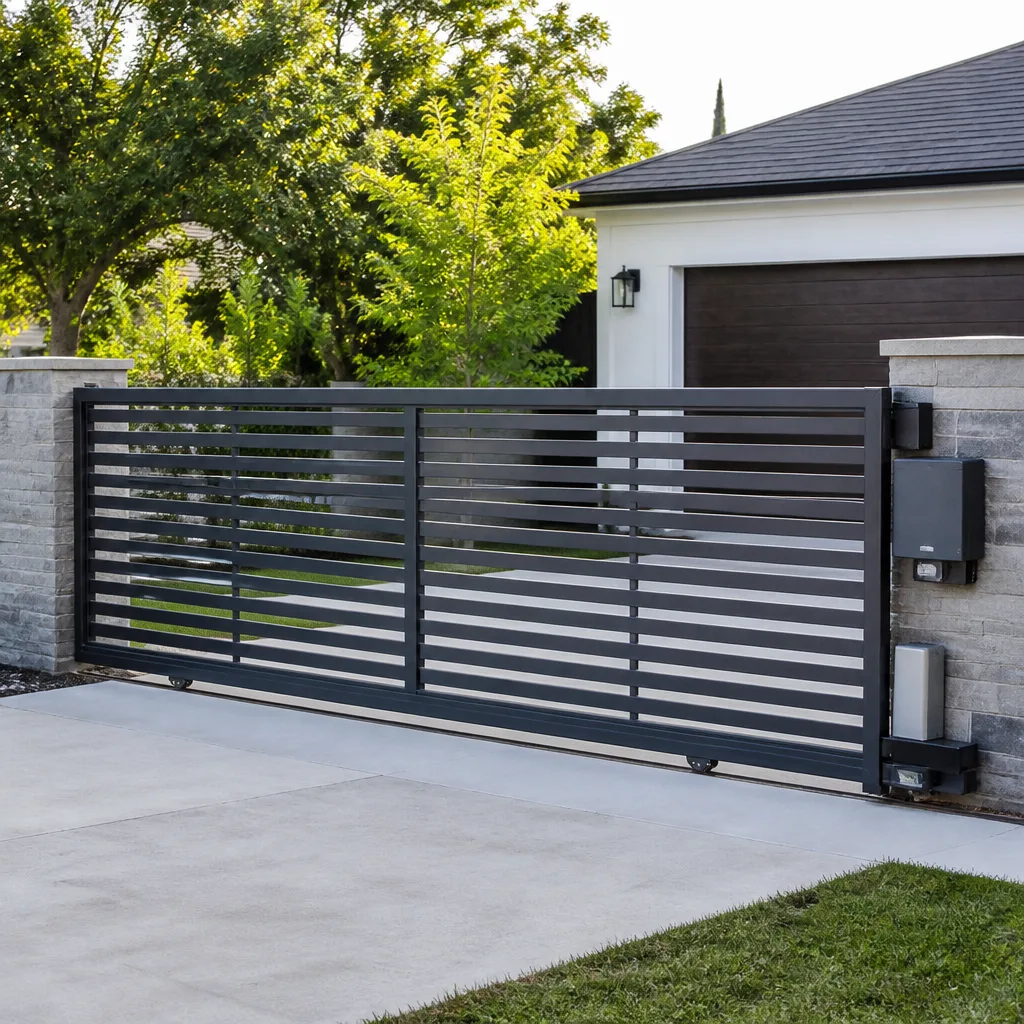
Slide gates see the opposite profile. Wind pushes along the panel’s edge rather than its face, so wind load is easier, but the track, the wheels, and the ground beneath them carry the burden. Rain season is the slide gate’s stress test. Standing water, sediment, and a shifting track bed all degrade a slide gate far faster in Rancho Cucamonga rain than any heat wave. A slide gate that binds in one spot is typically a track problem, and track problems compound when they are ignored through a wet winter.
The operator brand does not change these physics. A LiftMaster on a slide gate in Rancho Cucamonga still fights wet track sediment the same way a Linear does. What changes is the adjustment interface and the failure documentation available, which is part of why we service the specific operator on the property rather than steering toward a replacement. If a gate is worth the cost of a motor, it is worth calibrating that motor to the actual seasons it experiences.
Common Mistakes to Avoid
- Ignoring a slow gate in summer. A gate that moves slower in July than in April is telling you its motor or capacitor is stressed. Waiting until it stops leaves you with a dead motor on the hottest day when technicians are busiest.
- Adjusting torque without understanding the operator. Crank the torque up too high and the gate overdrives into the stop bolt. Force settings exist to protect both the gate and the people around it, and the wrong adjustment turns a minor issue into a bent post.
- Pressure-washing the operator or photo-eye. Water forced into a control box or a beam housing causes corrosion and shorts that were not there before the cleaning. A dry brush handles most of what a Rancho Cucamonga gate accumulates.
- Treating a gate slam as normal. That bang at the end of travel is not the gate’s personality. It is over-torque, and it is actively damaging the stop bolt, the welds, and the operator arm every time it happens.
- Waiting until after the first Santa Ana to prep. The best time to check torque was in September. The second best time is the day you notice wind in the forecast. Waiting until the gate is visibly damaged costs more in welds than a September adjustment would have.
- Keeping no record at all. Without a baseline, every new technician starts from zero. That is the most expensive mistake in gate ownership, and it is the easiest one to fix with a phone camera.
- Replacing a gate when the track is the problem. A slide gate that binds or stutters often needs track work, wheel replacement, or drainage correction, not a new gate. Diagnose before you replace.
When to Call a Professional
Call a professional when the gate stops mid-cycle and reopens without an obstruction in the path, when the breaker trips more than once, when a post weld shows a crack, when the operator hums but the gate does not move, or when you do not feel comfortable working near a gate operator’s electrical components. Gate operators run on line voltage and stored capacitor energy, and the safe call is the one you make before opening the housing. Gate Installation in Rancho Cucamonga and our repair page both describe what a full evaluation includes. Vance Gate Repair Rancho Cucamonga offers free estimates throughout Rancho Cucamonga, and the price is written and handed to you before any work starts. Call (909) 764-3720 to schedule.
Frequently Asked Questions
A seasonal inspection and adjustment visit in Rancho Cucamonga typically runs between $95 and $225, depending on the gate type, the number of operators, and whether any parts need replacement. The price is always quoted and agreed in writing before any work begins. Call (909) 764-3720 for an exact quote for your gate, the estimate is free.
You can, provided you have the operator’s manual and a clear understanding of what the force setting does. Most residential operators expose a torque or force adjustment through a dial or a menu, but the risk is setting it too high and causing over-torque damage, or too low and causing nuisance reversals. If the manual is not clear or you are not certain, schedule a technician. The adjustment visit costs less than a bent post weld. See DIY vs Professional Gate Repair: The Rancho Cucamonga Homeowner’s Decision Guide for help deciding.
That pattern most often points to heat-related failure in the control board or capacitor. The afternoon sun heats the control box enough to interrupt a marginal solder joint or weaken a capacitor, and the gate returns to work when the box cools in the evening. This is a known failure mode in Rancho Cucamonga summers, and it can be prevented by shading the control box and replacing degraded components before the hottest weeks.
The photo-eye is the infrared beam across the gate opening that signals the operator to stop and reverse if something crosses the path during closing. Santa Ana winds blow leaves, tumbleweeds, and dust through the beam, which can cause nuisance reversals. Cleaning the lens and checking alignment in September prevents most wind-season false trips.
We service nine major gate-automation brands including LiftMaster, FAAC, BFT, Linear, Viking, Ghost Controls, DoorKing, Elite, and Mighty Mule. We calibrate the motor already on the property rather than steering toward a replacement unless the operator is genuinely beyond repair. The price for any repair is written down before we start.
Once a year is the minimum for a gate with no known issues, timed for late September so the torque and photo-eye are checked before Santa Ana season. A gate that gets heavy daily use, faces full afternoon sun, or sits on a drainage-poor slide track benefits from a second visit in late March after winter rain. Both visits are less expensive than an emergency repair during a wind event.
The Bottom Line
Rancho Cucamonga gate care follows two stress periods, not four seasons. Summer heat kills control boards and capacitors. Santa Ana winds destroy stop bolts, welds, and operator arms through over-torque. Winter rain attacks slide tracks and buried wiring. Spring is for documentation and baselines. A ten-minute monthly check with a phone camera, a willingness to record what you find, and a September torque adjustment prevent most emergency gate repairs in this climate. Explore more guides & resources on seasonal maintenance. When the work exceeds the checklist, call a professional who writes the price down before starting and leaves a documented record when leaving. Gates are mechanical systems, and mechanical systems in Rancho Cucamonga respond to documentation the same way they respond to maintenance: predictably and well.
Written by Adrian Vance, Owner at Vance Gate Repair Rancho Cucamonga, serving Rancho Cucamonga since 2014.