
Free on-site gate assessment - hinges, posts, and your LiftMaster or Nice gate operator checked before anything is quoted
The assessment is free and the quote is the invoice.
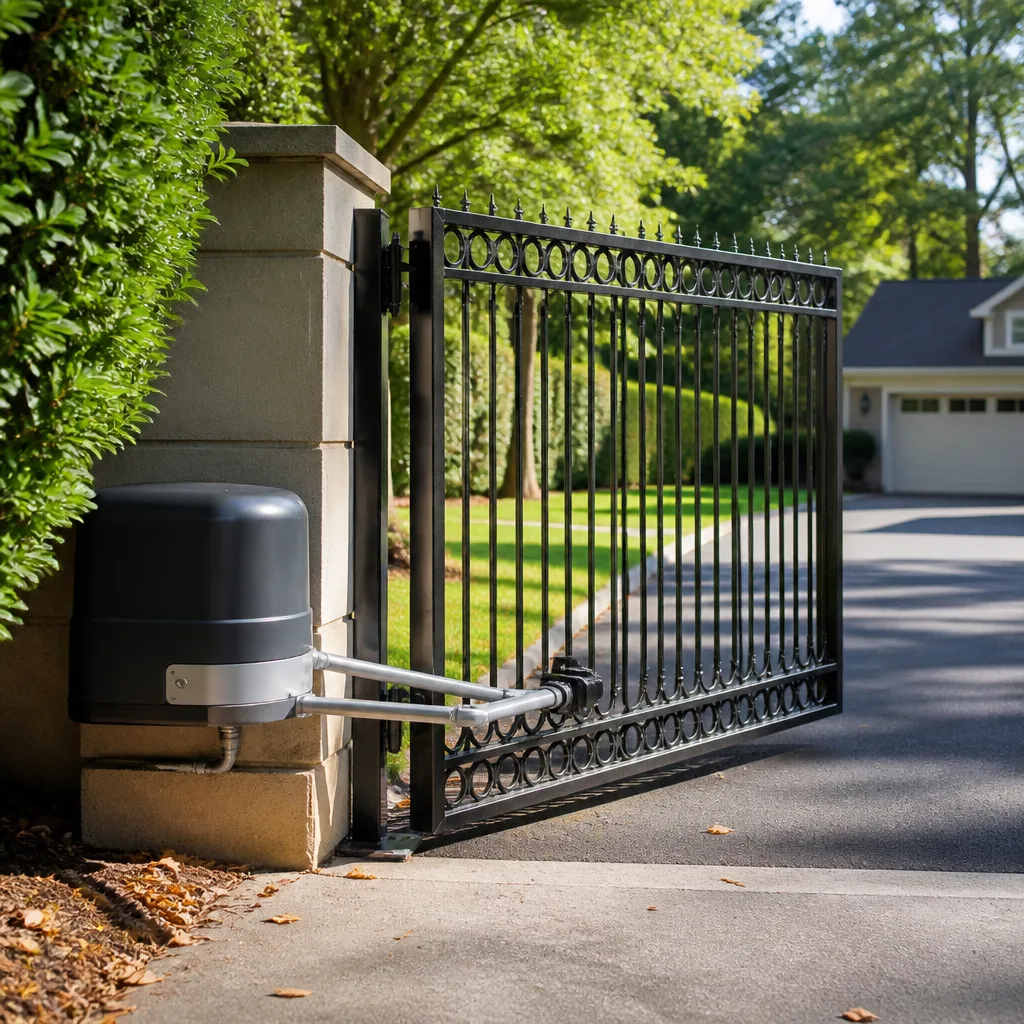
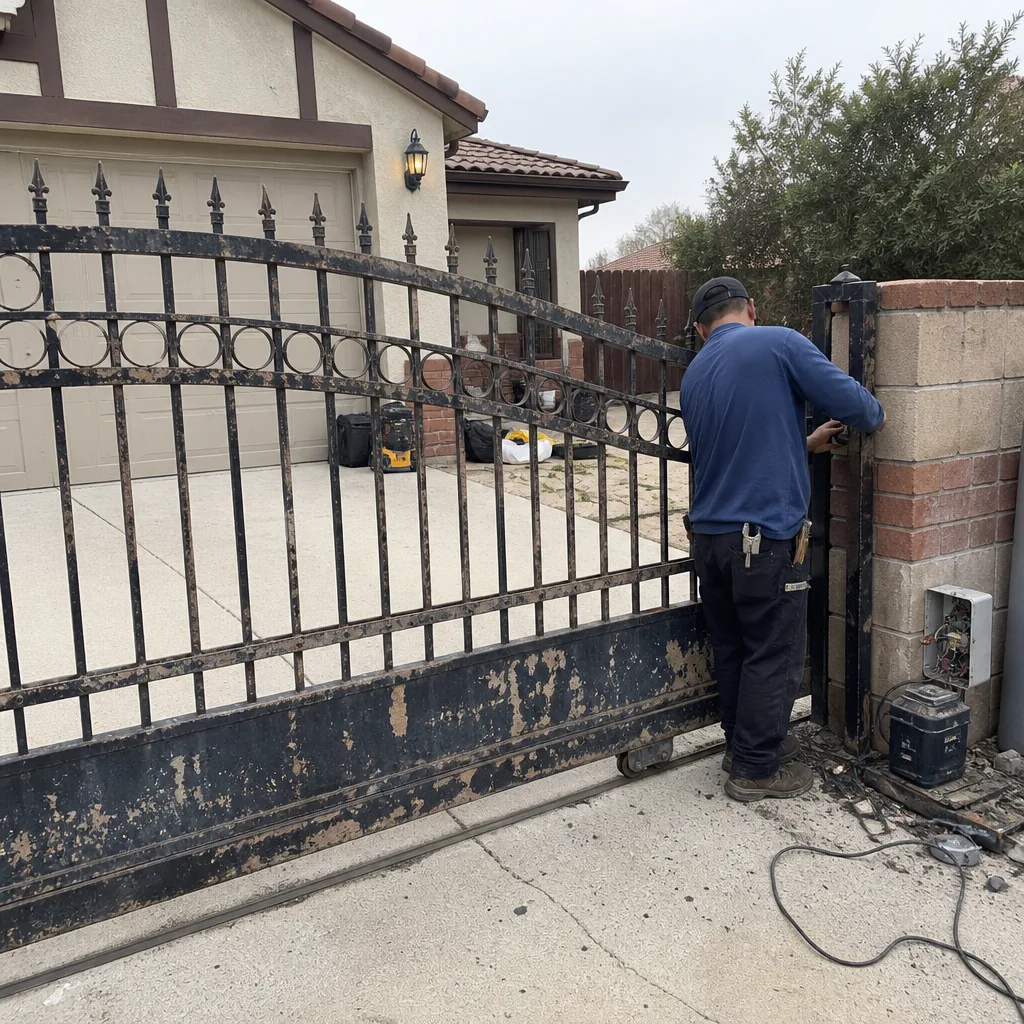 Before
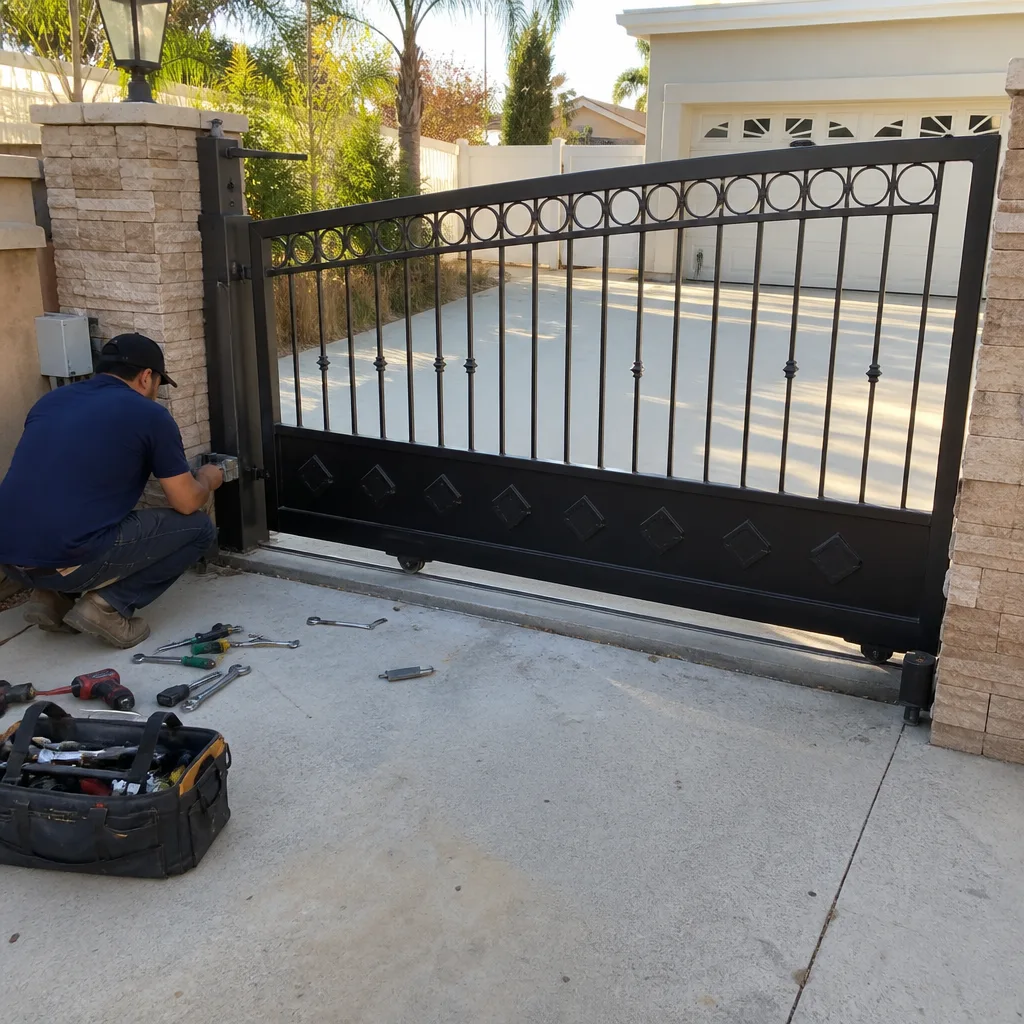 After
After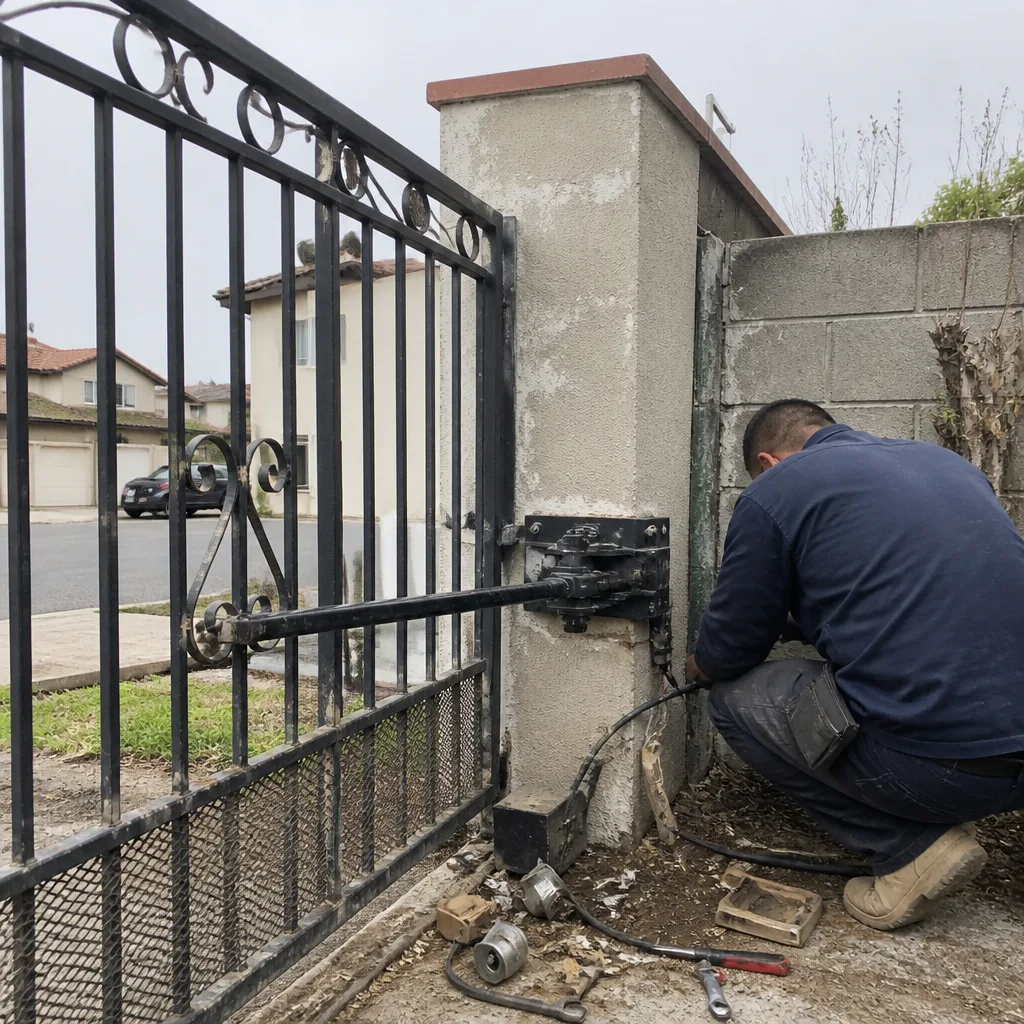 Before
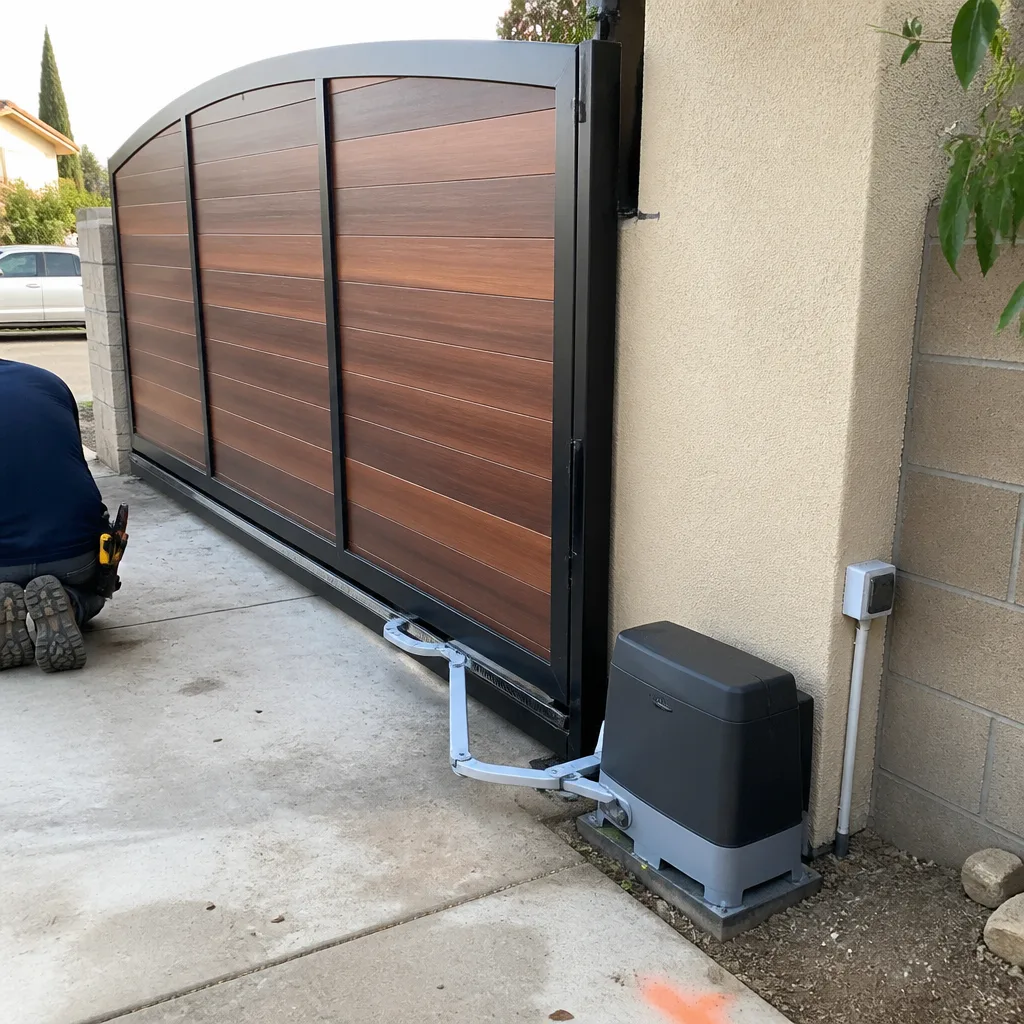 After
After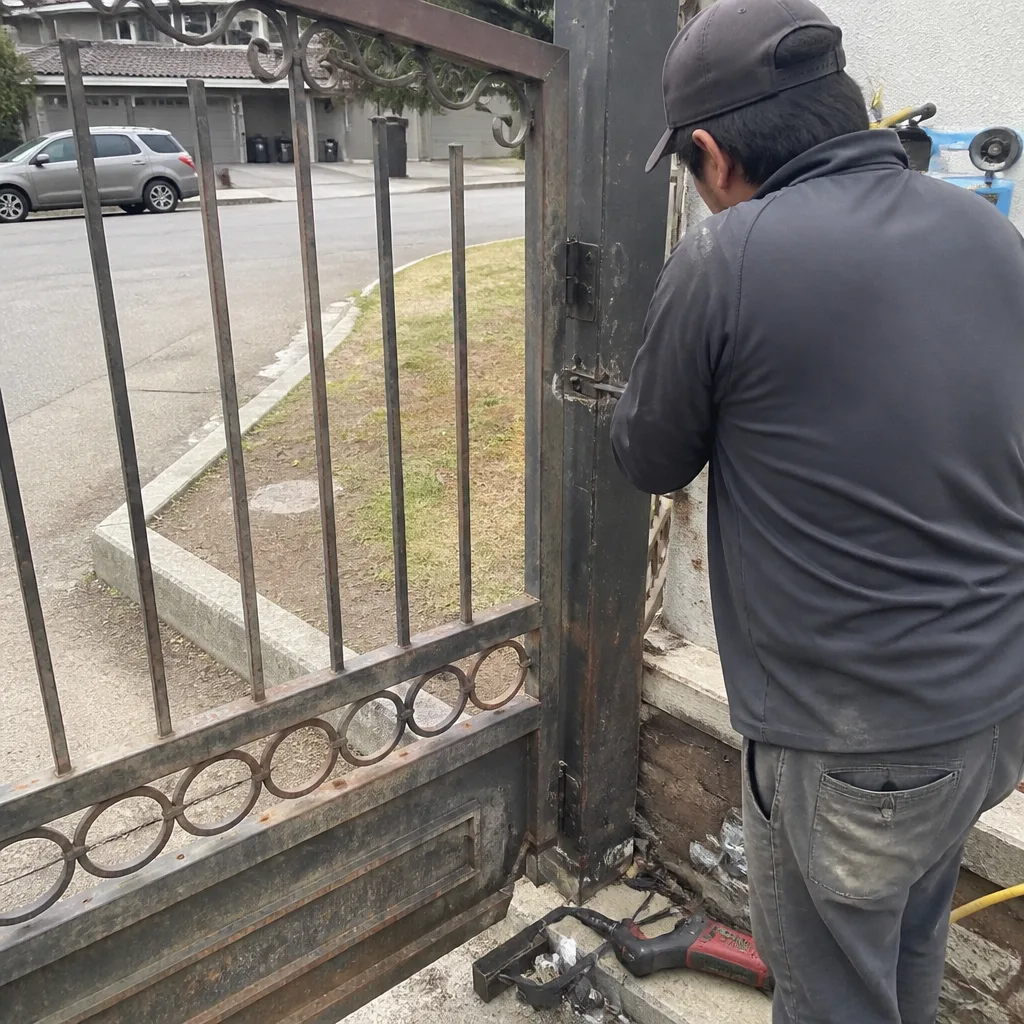 Before
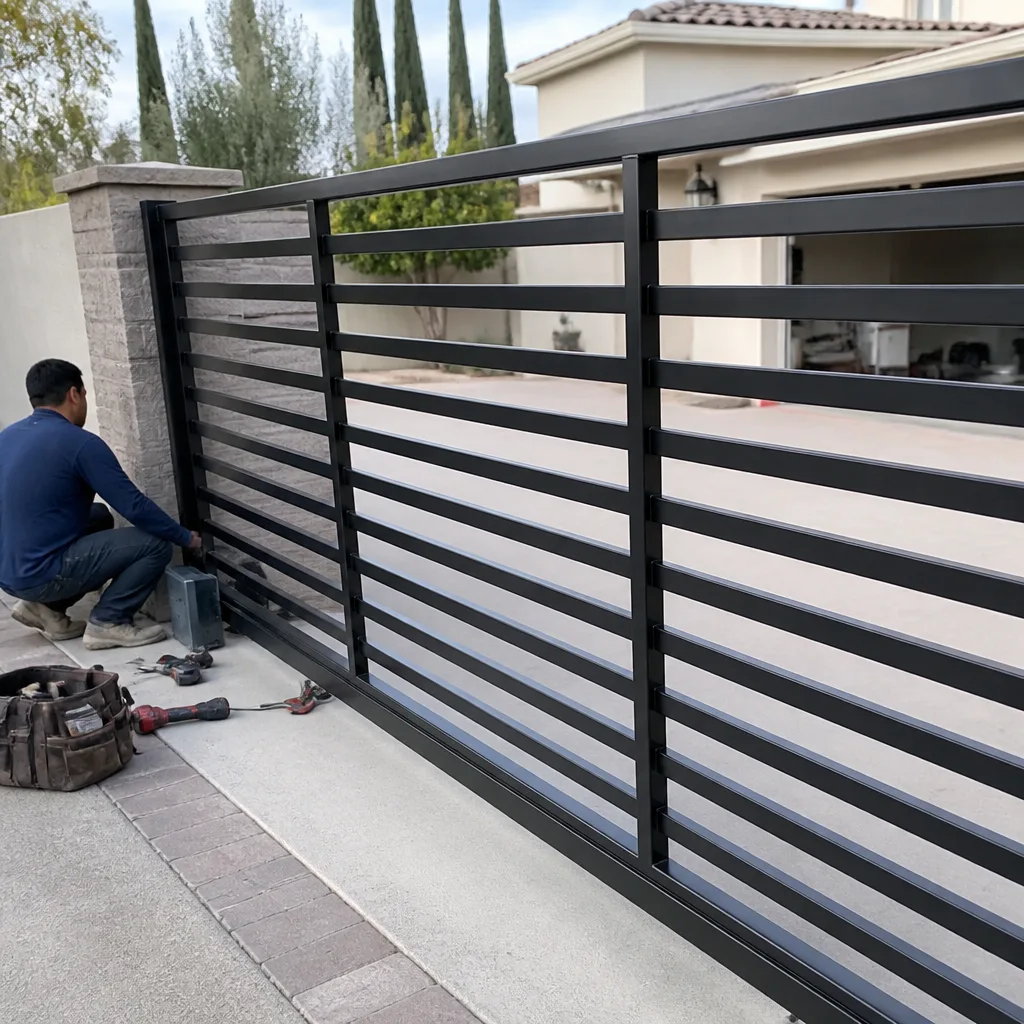 After
AfterFAAC Access Control Installation: The Rancho Cucamonga Owner’s Guide
FAAC access control installation in Rancho Cucamonga typically runs $390-$780 for a keypad or card reader replacement on an existing FAAC swing or slide gate, including the part and labor. If the job also requires new wiring from the house to the gate, budget $950-$1,450. We stock FAAC-compatible keypads, readers, and receiver boards on our trucks, and most straight swaps are done same-day with a written price handed to you before any work starts.
The way most Rancho Cucamonga homeowners discover this part has failed is unglamorous. The keypad works until it doesn’t. Three codes get tried instead of one. The gate opens once, then ignores the remote until the receiver gets power-cycled. Or the entry code that worked at 7 a.m. does nothing at 7 p.m. By the time we arrive, someone in the house has usually spent a weekend convinced the gate motor itself is dead when the actual problem is a $140 receiver board or a corroded keypad connector.
We’re an independent service provider, not an FAAC affiliate. That matters because we’re never steering you toward a full automation-replacement quote when a $95 part fixes the problem. Our job is to match the right part to your exact FAAC model, install it cleanly, and leave you with paperwork that proves what was installed and why.
Which FAAC Models This Applies To
FAAC’s residential gate lineup in the U.S. falls into two main families: the swing-arm series (400, 412, 415, 422, S418, S450H) and the slide series (740, 741, 844, C721, S800H). Most light-commercial gates around Rancho Cucamonga run the longer-stroke 400-series operators. The access control component is the same across nearly all of them: the operator’s control board accepts a dry-contact input from whatever keypad, card reader, or telephone-entry device you have. That’s true whether you’re dealing with an FAAC E024U control board or a newer E145 board.
Here’s the compatibility gotcha owners miss: older FAAC boards accept 24-volt DC accessory power, while many aftermarket keypads sold online want 12-volt DC. Wire a 12V keypad into a 24V FAAC terminal and it may work for a week, then fail without warning. We’ve pulled half a dozen burned-out keypads off gates in the Rancho Cucamonga foothills where the cause was exactly that. The fix is either a keypad rated for 24V or a small buck converter installed inline. Most online sellers never mention it.
On the OEM-versus-aftermarket question: for FAAC receivers and photo-eyes, we generally recommend OEM or a known-good equivalent like FAAC’s own RP433 receiver series. For keypads, a quality outdoor-rated unit from DoorKing or Linear often outlasts the OEM part in California sun. The key is matching voltage, mounting form factor, and whether your board expects a normally-open or normally-closed contact. We verify all three before quoting anything.
Signs Your FAAC Access Control Installation Is Failing
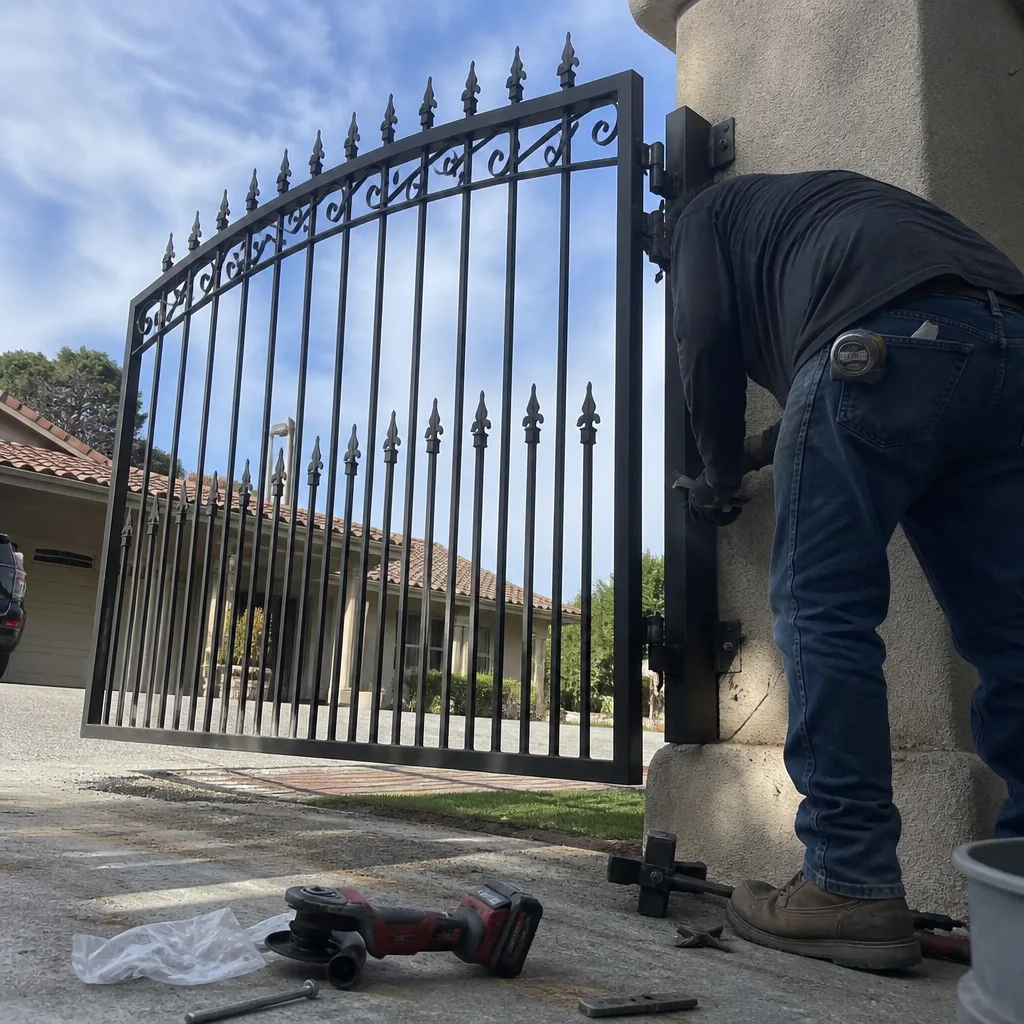
- Keypad accepts the code but the gate doesn’t move. This almost always means the relay on the keypad or the receiver board has failed. The keypad beeps, the display lights up, and then nothing reaches the operator. We’ve seen this on FAAC operators where a lightning strike near the Rancho Cucamonga foothills traveled up the low-voltage line and welded the relay contacts shut.
- The gate opens randomly without anyone pressing anything. A failing receiver board picks up stray RF and treats it as an open command. If the neighbor’s garage door or a passing truck with a two-way radio opens your gate, the receiver’s filtering has degraded. FAAC’s older 433 MHz receivers are particularly prone to this after 5-7 years outdoors.
- The keypad works sometimes, usually after you press hard or wiggle the cable. That’s a corroded connector or a cracked solder joint. Rancho Cucamonga’s summer heat cycles expand and contract the plastic keypad housings, and the flex connector between the keypad face and the board is the usual casualty. It’s a cheap part but a fiddly repair if moisture has reached the board.
- Multiple remotes stop working at once while the keypad still functions. The receiver board inside the FAAC operator has failed, not the remotes. This is one of the most common fixable problems we see, and it’s often misdiagnosed by owners who spend $60 on replacement remotes first.
- The gate reverses or stops mid-cycle when the keypad is used. Sometimes the access control sends a continuous signal rather than a momentary pulse, confusing the FAAC board into thinking two commands arrived. This is a board-programming issue on the keypad side, and it’s corrected by changing the relay’s output mode, not by replacing the operator.
BeforeAfterReplacement Cost & What’s Included
Replacing an FAAC access control component in Rancho Cucamonga runs $390-$780 installed for the part-and-labor swap, with the range depending on whether we’re replacing a keypad (lower end) or a receiver board plus remote programming (higher end). The price is written and handed to you before any work starts, under Haven Standard Clause 1. That price holds unless we open something up and find damage that genuinely changes the scope, and if that happens we discuss it with you before touching a second part.
Every install includes the part, the labor, programming of any new remotes or codes, and a photo log of the finished work: the old part as we found it, the new part installed, the wire connections, and the final test cycle. That documentation stays with you and in our job file. The work carries the 365-Day Done Right Promise, so if the access control misbehaves within a year, we’re back out to make it right at no charge.
DIY or Call Us?
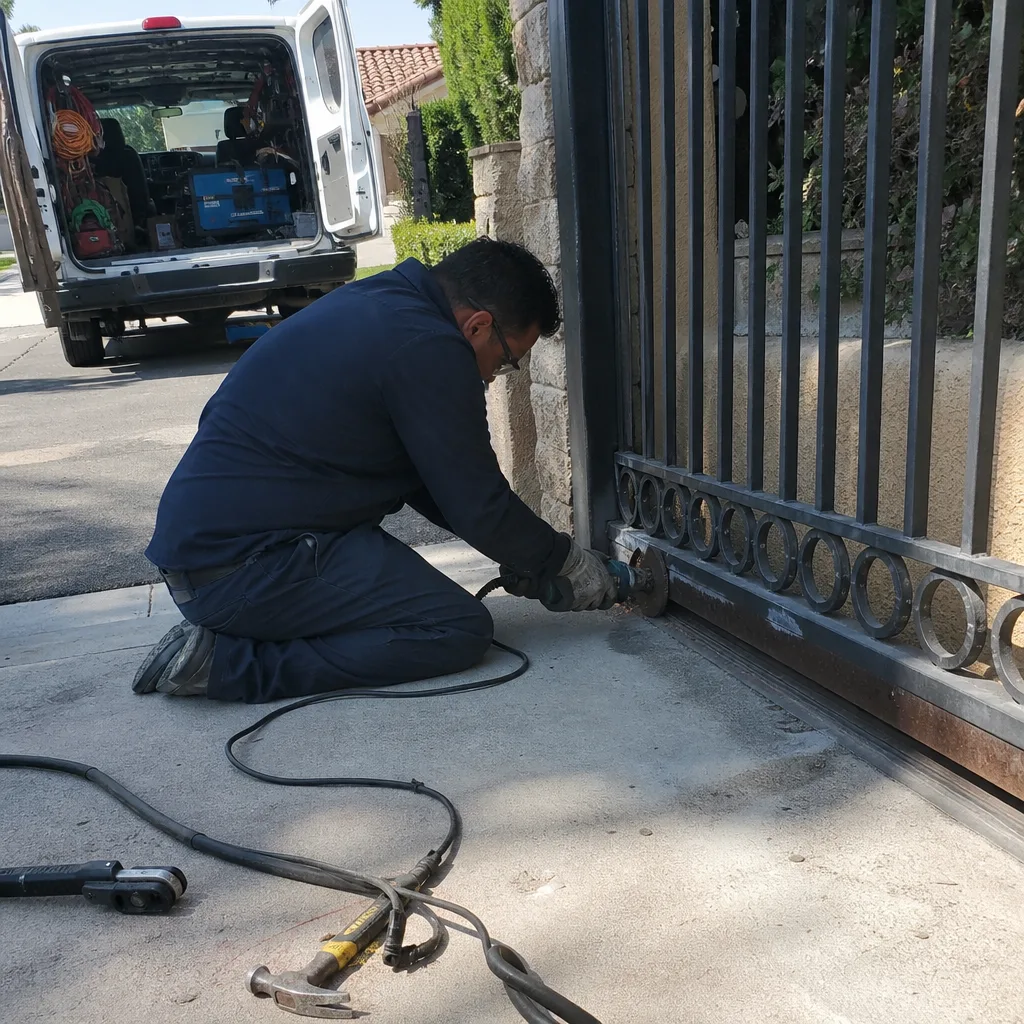
FAAC access control is low-voltage DC in most residential applications, which means the electrical risk is modest compared to the 120V side of the operator. The real risk is doing a wrong repair that costs more than doing nothing. Handing a 12V keypad to a 24V board, wiring a normally-open relay to a normally-closed input, or mounting a keypad without sealing the back against Rancho Cucamonga’s winter rain are all $40 mistakes that turn into $400 service calls.
You can safely do the diagnosis: check whether the keypad display lights up, test whether remotes work independently, and wiggle the wiring to see if the problem is intermittent. If the access control part is confirmed bad, and you’re comfortable matching voltage and relay type, a keypad swap is a reasonable weekend project on a swing gate. Receiver boards and anything inside the operator cabinet are different; the FAAC board has line-voltage terminals nearby and getting into the cabinet without testing for voltage is how people get hurt. If any part of that last sentence made you pause, call us at (909) 764-3720 and we’ll be out quickly, written price in hand.
FAQs
Five to eight years outdoors. Direct sun exposure shortens keypad life noticeably; keypads mounted on south-facing gate columns near the Rancho Cucamonga foothills tend to show keypad-face cracking and display fade by year six. Receivers last a bit longer, usually seven to ten years unless they take a lightning strike or a power surge.
Often, yes. Corroded connectors, cracked solder joints, and water-damaged keypad pins are repairable if the board hasn’t been soaked. If the receiver board’s filtering has failed or the keypad’s relay is welded shut, replacement is usually cheaper than board-level repair. We’ll tell you which one applies before quoting anything. Call (909) 764-3720 and we’ll give you a straight answer, not a sales pitch.
A keypad swap takes 45-90 minutes including programming and testing. A receiver board replacement with remote programming runs about two hours. If we’re also running new low-voltage wire from the house, plan for half a day. Most straight part replacements are done same-day.
We stock FAAC-compatible keypads, RP433 receivers, photo-eyes, and edge-sensor connectors on our service trucks, along with parts for LiftMaster, Mighty Mule, and Ghost Controls operators. If your FAAC model needs something we don’t carry on the truck, we can usually have it in hand within 48 hours and we’ll tell you that timeframe before you commit to anything.
If your FAAC keypad, receiver, or card reader has failed in Rancho Cucamonga, call us at (909) 764-3720. We’ll match the right part to your model, quote you a written price before touching a tool, and leave you with a photo record of exactly what was found, what was installed, and how it was tested.
Written by Adrian Vance, Owner, Vance Gate Repair Rancho Cucamonga at Vance Gate Repair Rancho Cucamonga, serving Rancho Cucamonga and nearby areas.